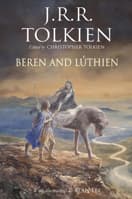
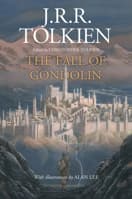
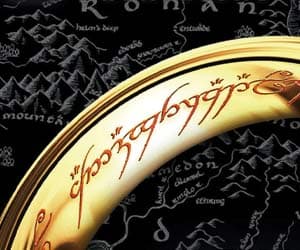
Painstakingly restored from Tolkien's manuscripts and presented for the first time as a fully continuous and standalone story, this paperback of the epic fantasy tale of The Children of H rin will reunite fans of The Hobbit and The Lord of the Rings with Elves, dragons, Dwarves and Orcs, and the rich landscape and characters unique to Tolkien.
It is a legendary time in the First Age of Middle-earth, long before The Lord of the Rings, and Morgoth, the first Dark Lord, dwells in the vast fortress of Angband in the North; and within the shadow of the fear of Angband, and the war waged by Morgoth against the Elves, the fates of T rin and his sister Ni nor will be tragically entwined.
Their brief and passionate lives are dominated by the elemental hatred that Morgoth bears them as the children of H rin, the man who dared to defy him to his face. Against them Morgoth sends his most formidable servant, Glaurung, a powerful spirit in the form of a huge wingless dragon of fire, in an attempt to fulfil this dark family curse, and destroy the children of H rin.
Begun by J.R.R. Tolkien at the end of the First World War, this tale of heroic fantasy, The Children of H rin, became the dominant story in his later work on Middle-earth. But he could not bring it to a final and finished form. In this book Christopher Tolkien has constructed, after long study of the manuscripts, a coherent narrative without any editorial invention.
I read while listening to the audiobook at the same time, and it was such an immersive experience. The lore of first and second age is something special that Tolkien was able to capture so long ago. I loved it.
1
★★★★★
My new favorite Tolkien novel
By Tom, December 27, 2023
I am so glad this book was published. It is a fascinating counterpoint to LOTR.
0
★★★★★
My husband's all time favorite book!
By Ariana, April 30, 2020
Verified Purchase
I personally haven't read this story, but from what I have heard it is a very in-depth and heart wrenching tale. The artwork is fantastic for the hardcover. I wanted to get my husband all the Tolkien books there were in 2018, so I got them all here at a incredible price. My husband had no idea because of how cheap it was!
4
★★★★★
An Early Glimpse of Middle earth
By Thriftbooks.com User, April 22, 2007
The Children of Hurin is a tale dating from the very early years of J.R.R. Tolkien's mythical worlds. He began writing it as early as 1918 and continued to work on it off and on for the rest of his life. Other versions of the Tale have been included in The Silmarillion and Unfinished Tales, but now we have the story as close to the way J.R.R. Tolkien intended it as his son Christopher could recreate. The Children of Hurin takes place in Middle earth thousands of years before the events of The Hobbit and The Lord of the Rings, specifically in Beleriand, a region that by the time of The War of the Ring had long since sunk beneath the Sea. During the First Age Elves and Men (the Eldar and the Edain) were locked in combat with the Great Enemy Melkor/Morgoth, of whom Sauron in The Lord of the Rings was a mere servant. At the Tale's beginning Morgoth has conquered the greater portion of Beleriand and now rules it from his fortress of Angband in the mountains of Thangorodrim. The Elvish kingdoms of Doriath, Nargothrond, and Gondolin are hidden and for the moment still safe. The Edain have been less fortunate and are now scattered and largely demoralized. Hurin, the Heir of the House of Hador, seeks to rally Men to continue the struggle. Morgoth captures Hurin and places a curse on his family. Hurin's children Turin and Nienor must deal with the curse and its consequences for the rest of their lives. This is a dark story full of tragedy, deceit, and violence. Tolkien's models were the Germanic sagas, but there are also elements of Greek drama, in particular in the role Fate plays in the lives of so many characters. There are also many elements readers of Tolkien's later works will recognize: dragon-guarded treasures, swords and other talismans with unknown powers to be reckoned with,and proud men and women who meet their destinies with grim determination. Although the story is complete in itself, there are hints of more Tales to come, and it is to be hoped that Christopher Tolkien will provide the full "Fall of Gondolin" among other stories still left to be completely told. An additional pleasure are the very fine but sombre paintings Alan Lee has provided to illustrate The Children of Hurin. They perfectly match the mood of the story and greatly enhance it.
6
★★★★★
Tolkien's Missing Link between the Hobbit Cycle and The Silmarillion tradition
By Thriftbooks.com User, April 19, 2007
When the Tolkien Estate announced a new Tolkien novel to be published in April, 2007, the world was shocked. After all, Tolkien died 34 years before THE CHLDREN OF HURIN was published. Reactions varied from trepidation and fear, to charges that the Estate is trying to milk the pubic for more money, to sheer excitement that, beyond all odds, we're getting another Tolkien story. We all know Hollywood is eying it greedily, though the Estate has made it quite clear that it is not interested in selling the film rights any time soon. Naturally, an event such as a publication of a new novel by a long deceased major author is bound to excite different reactions from different quarters. Depending on where you stand in Tolkien fandom will largely define your reactions to the story. First, just a few quick facts about the novel. *CoH can be read independently of Tolkien's other works, due largely in part to C. Tolkien's excellent introduction, explaining the background and context in which these events occur in Tolkien's imagined cosmos. Having an overall general knowledge of Tolkien's legendarium is certainly helpful, but fortunately it is not a pre-requisite as the story is strong enough to stand independently. *CoH is much darker than the Hobbit cycle. It is a very tragic story on a Shakespearian level, and altogether not suitable for children, featuring incest and murder as prominent plot features. *The plot revolves around the Dark Lord Morgoth's curse on Turin and Nienor, who are the Children of Hurin, for Hurin's defiance against Morgoth. Morgoth is Tolkien's equivalent of Satan, and who Sauron is but a servant too. *CoH is easier to read than THE SILMARILLION, though CoH still employs in places the archaic style found in that book. In style and content, it bears similarities to both LOTR and THE SILMARILLION, mingling the archaic style of the later with the more conventional novel style of the former. *Although the novel has been "reconstructed" by Christopher Tolkien, unlike certain elements of the published SILMARILLION, there has been no editorial interpolation or invention. Other than minor grammatical errors and some brief transitional passages, the text is entirely as Tolkien conceived it. *Approx 25% of the text has never been published before. The remaining 75% has been published in THE SILMARILLION and UNFINISHED TALES, though Christopher Tolkien notes there are several changes to the text that do not appear in UNFINISHED TALES *Though the press has made much of the fact that Tolkien began this in 1918, almost all the text used in the book was written AFTER LOTR was written *There is a swift narrative urgency. While THE SILMARILLION stands as a broad overview of Tolkien's mythology with hundreds of characters vying for the readers' attention, CoH keeps its focus on a well-defined cast of main characters. There are three primary readerships that will be approaching THE CHILDREN OF HURIN. Depending on what group you belong
5
★★★★★
Answers to questions, and a man misplaced in time
By Thriftbooks.com User, April 18, 2007
THE QUESTIONS To address the questions that most people have: * This is an easier read than The Silmarillion. * It is a greatly expanded version of Chapter XXI of The Silmarillion, "Of Túrin Turambar", BUT... * Reading The Silmarillion is not necessary. * It is told in a narrative voice. * The narrative voice is archaic. * The so-called archaic voice falls somewhere in between The Silmarillion and LOTR in style. * Húrin is a great hero amongst men. * His son, Túrin, is whom this story is chiefly about. His daughter Nienor makes a late, but significant, appearance. Significant enough for this book to be called The Children of Húrin. * You will recognize a few names from LOTR, but don't look for furry-footed Hobbits. A Balrog makes a brief appearance, as does a dragon. * Unlike some posthumous publications of Tolkien's, there is only one footnote in the entire narrative, and it doesn't interrupt the flow of the story. It's inclusion wasn't necessary, but the information was nice to know. * There is an Index of Names at the back of the book to help the reader keep track of who is who. * As always, a well detailed map is included. * Read the Introduction. Christopher Tolkien does a wonderful job preparing the reader who hasn't read The Silmarillion for what is to follow. I can't emphasize the last point enough. One reviewer noted that you wouldn't know who Melkor was, and that this was detrimental to the reading of The Children of Húrin. Not so! Melkor (known later to Elves and Men as Morgoth, which translates to "Dark Foe" in Sindarin) is discussed in the Introduction. In the event that you ignore my advice, Morgoth is the original Dark Lord, for whom Sauron was but a mere Lieutenant. Think on the malevolence of Sauron, and imagine him serving something far more powerful and foul. That is Morgoth. Indeed, "malice that wakes in the morning is the mirth of Morgoth ere night." Between the Introduction and the first chapter, you have everything you need to know. Regarding the first chapter: it starts slow. It feels biblical: "Glóredhel wedded Haldir son of Halmir, lord of the Men of Brethil; and at the same feast his son Galdor the Tall wedded Hareth, the daughter of Halmir. Galdor and Hareth had two suns, Húrin and Huor..." But for those of us who are confused names, that's the worst of it, and as noted above, there is an Index in the back to help you keep track if necessary. THE STORY Húrin was a great warrior of Men, and fought with the elves against Morgoth in the Fifth Battle of Beleriand, called Nirnaeth Arnodediad in the Sindarin tongue of the grey-elves, meaning The Battle of `Unnumbered Tears'. It is aptly named, for many lords - elf, dwarf, and man - died that day. Húrin, though, was captured, for Morgoth wanted more than his life. He demanded from Húrin the location of the hidden city-kingdom of Gondolin, the last great stronghold of the elves. But Húrin defies Morgoth, mocking him, and in his wrath, Morgoth places a curse on his children
When an author passes away, it is fairly common for them to leave behind unfinished manuscripts. In other cases, authors have outlined an entire series of books, but are unable to complete them all. Sometimes called continuation books or series, these twelve tag-teamed projects were all started by one author and finished by another.
We've been nerding out about Amazon's upcoming Lord of the Rings series premiering on September 22. So, we're reading everything we can about the history of these epic stories and we've learned some pretty interesting things. Here are ten little-known facts we've uncovered.