ISBN: 1023030055
ISBN13: 9781023030052
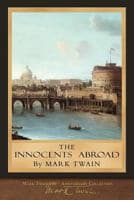
The Innocents Abroad
ISBN: 1023030055
ISBN13: 9781023030052
Formats
Conditions
Formats
Conditions
Conditions
Formats
Conditions
"The Innocents Abroad, Part 1 of 6" by Mark Twain invites you on a hilarious and insightful journey through 19th-century Europe. This classic travel narrative recounts the experiences of a group of American tourists as they navigate the wonders and absurdities of the Old World. Twain's signature wit and keen observations offer a unique perspective on European culture and the American perspective.
Explore iconic landmarks and hidden gems through the eyes of these "innocents," encountering both awe-inspiring beauty and comical misunderstandings. This book, meticulously prepared for republication, captures the spirit of adventure and the enduring fascination with cross-cultural encounters. A timeless exploration of travel, humor, and the contrasting landscapes of the United States and Europe.This work has been selected by scholars as being culturally important, and is part of the knowledge base of civilization as we know it.
This work is in the public domain in the United States of America, and possibly other nations. Within the United States, you may freely copy and distribute this work, as no entity (individual or corporate) has a copyright on the body of the work.
Scholars believe, and we concur, that this work is important enough to be preserved, reproduced, and made generally available to the public. We appreciate your support of the preservation process, and thank you for being an important part of keeping this knowledge alive and relevant.
Samuel Langhorne Clemens is internationally known by his pen name, Mark Twain . The author of numerous works, Twain's legacy includes two classic American novels, The Adventures of Tom Sawyer and Adventures of Huckleberry Finn, both of which are still read and studied worldwide. Born in 1835, Twain grew up in Hannibal, Missouri and left school after the fifth grade. He worked as a typesetter and reporter for the local newspaper, and became a riverboat pilot on the Mississippi River. Twain claimed that he had invented his pseudonym from his riverboat experiences and he had earlier adopted the pen name Thomas Jefferson Snodgrass. Twain followed his brother to Nevada, where he quickly abandoned mining in favor of writing for the Virginia City newspaper. In 1865, Twain's story "The Celebrated Jumping Frog of Calaveras County" brought him international renown. Eventually he moved east, settling in Connecticut where he died in 1910. A humorist and lecturer, Twain had friendships with presidents, kings, and celebrities. His name lives on, among other ways, in numerous community and school names, along with the Mark Twain Prize for American Humor awarded annually through the John F. Kennedy Center for the Performing Arts.
There are currently no reviews. Be the first to review this work.