


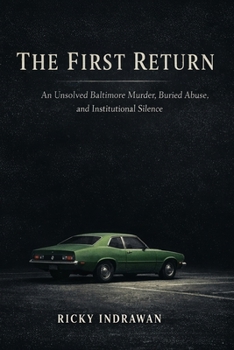
The First Return: An Unsolved Baltimore Murder, Buried Abuse, and Institutional Silence

A young nun vanished after an ordinary errand. Her car returned. She did not.
In November 1969, Sister Catherine "Cathy" Cesnik, a twenty-six-year-old teacher and Catholic sister, disappeared in Baltimore. Nearly two months later, her body was found near Monumental Avenue. The homicide remains unsolved: no one has been charged, no court has assigned guilt, and the surviving public record still cannot answer who killed her or why.
The First Return is a victim-centered historical true crime investigation into the life behind the case, the final evening, the discovery of her body, and the contradictions that have kept the cold case open for more than half a century. It begins with Cathy as a daughter, sister, teacher, and trusted presence in the lives of students before following the documented timeline from disappearance to homicide investigation.
As former students later described abuse surrounding Archbishop Keough High School, the case took on a wider and more disturbing context. Their allegations, witness memories, civil litigation, renewed investigation, and the long record of institutional failure changed how the murder was understood without proving a single theory of the crime. The book carefully separates documented facts from reported testimony, inference, rumor, and unresolved suspicion.
The investigation also examines the missing hours, the returned car, the crime scene, the men who entered the case, the November 1969 murder of Joyce Malecki, and the competing account surrounding Cathy's personal relationships. Modern DNA testing promised clarity but did not solve the homicide. Instead, the evidence remains a contradiction stack: meaningful details that support questions yet stop short of a legally supported answer.
Rather than naming a killer the record does not name, this book asks what the evidence can still bear. It considers trauma memory, forensic limits, institutional protection, public silence, and the moral cost of leaving survivors and families to carry unanswered questions across decades.
A concluding chronology and key-figure guide organize decades of testimony, investigative steps, and unresolved questions without turning uncertainty into certainty.
Written in an atmospheric but restrained investigative style, The First Return is for readers of cold case nonfiction, unsolved murder investigations, historical true crime, and evidence-aware accounts of institutional abuse. It offers no false closure. It returns to Cathy's life, follows the record as far as it will go, and keeps the difference between allegation and proof in view.
Customer Reviews
ThriftBooks ® and the ThriftBooks ® logo are registered trademarks of Thrift Books Global, LLC
