


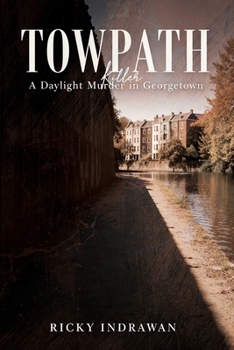
Towpath: A Daylight Murder in Georgetown

A daylight murder. An acquittal. A Washington case that never found a final answer.
On October 12, 1964, artist Mary Pinchot Meyer was shot to death on the Chesapeake & Ohio Canal towpath in Georgetown, Washington, D.C. The killing happened in broad daylight, within earshot of witnesses, and quickly produced a suspect. Yet the case that appeared straightforward at first would become one of Washington's most enduring unsolved murder mysteries.
Towpath reconstructs the Mary Pinchot Meyer case from the scene on Canal Road through the arrest and prosecution of Raymond Crump Jr. Witness descriptions, timing, police decisions, missing physical evidence, and the forensic record are examined against the government's theory. Crump was charged with murder and pleaded not guilty. At trial, his defense challenged the identification evidence and exposed serious weaknesses in the prosecution's case. The jury acquitted him, leaving the homicide unresolved.
The book then follows the questions that outlived the courtroom. Meyer had moved through a world of Georgetown society, art, politics, journalism, and intelligence. Her former husband, Cord Meyer, was a senior CIA official, and later accounts connected her personally to President John F. Kennedy. After her death, concern over her private diary drew family members and CIA counterintelligence chief James Jesus Angleton into a search that became central to the case's later mythology.
Those facts have fueled decades of speculation, but this historical true crime investigation does not treat suspicion as proof. It separates what the surviving record can support from what later retellings, disputed memories, missing records, and conspiracy theories cannot establish. The diary matters, the intelligence connections matter, and the Kennedy-era context matters-but none is presented as a substitute for evidence about who fired the shots.
At the center is the criminal case itself: a public towpath, two gunshots, eyewitness testimony under pressure, a defendant found near the scene, no recovered murder weapon, disputed identification, forensic gaps, and a trial that ended without a conviction. The result is both a cold case investigation and a study of how race, class, institutional power, public memory, and uncertainty can shape the story told around an unsolved crime.
Written in a restrained, victim-centered style, Towpath is for readers of historical true crime, unsolved murder investigations, courtroom cases, and Washington history who prefer documented uncertainty to manufactured certainty.
Mary Pinchot Meyer's life was larger than the mystery that followed her death. This book returns to the record, the people, and the questions that remain.
Customer Reviews
ThriftBooks ® and the ThriftBooks ® logo are registered trademarks of Thrift Books Global, LLC
