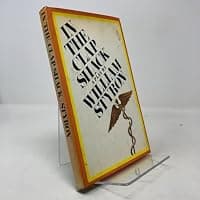
This Quiet Dust and Other Writings
Conditions
A read copy that remains in clean condition.
Formats
Conditions
*Best Available: (ex-library, missing dust jacket)
A read copy that remains in clean condition.
Conditions
A read copy that remains in clean condition.
Formats
Conditions
*Best Available: (ex-library, missing dust jacket)
A read copy that remains in clean condition.
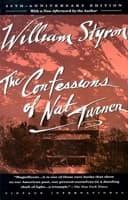
Whether fictionalizing a slave uprising in The Confessions of Nat Turner or breaking the silence on clinical depression, William Styron's work inspired not only accolades but national dialogues.
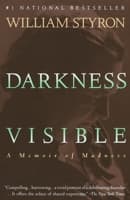
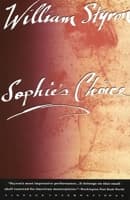
William Styron is one of America's greatest contemporary writers. I read "The Confessions of Nat Turner" in high school and was blown away by his ability to bring history alive, to reproduce the sights, smells, sounds, the place entire. He also has that wonderful rolling Southern rhetorical cadence and style of many of the writers from his region that almost certainly derives from the King James Bible, one of the masterpieces of the English language and a book much beloved in the South. Styron in many of his books rails against what he perceives to be the cruelty of God, but as he himself admits in one of the essays here, he can't get away from the moral precepts of the Bible; they inform everything he writes. So, Styron's great strenghts are his rhetorical brilliance, his moral perspective and forcefulness as a tragedian, and his uncanny sense of place. These make him invaluable as a historical novelist. His weakness is, as one critic put it, is that sometimes he tries to make the rhetoric do the work of thought. That is, the beauty of his language occasionally obscures ideas that are half-baked or ill-conceived. (A good example of this is his popular memoir of his clinical depression, "Darkness Visible", which is terrifyingly vivid about how depression feels but offers almost no insight into what causes it or how his went away.) This quality mars a few of the essays in this volume, particularly "Chicago 1968", an account of his experiences at the Democratic Convention of that year that is screechingly dated and unintentionally funny. Styron is just bound and determined to be on the side of the Radically Chic Righteous Young Yippies, no matter what. But when he sticks to history, literary subjects, and his own books that he knows so well, his essays are a treat. The title essay hauntingly explores the legend of Nat Turner, and in an addentum he gives his side of the fierce controversy that raged over his novel. (I was gratified to learn that one of the great historians, Eugene Genovese, took Styron's side in that debate.) In "Hell Reconsidered" he writes of his discovery of the theologian Richard Rubenstein's stunning little book "The Cunning of History" and its influence on the novel he was then writing, "Sophie's Choice." Rubenstein writes that Auschwitz was the summation of some parts of Western culture, not an aberration. His terrifying pessimism can be a curative thing in a time when God is left out of the human equation. There are also entertaining considerations of Scott Fitzgerald, Faulkner, Robert Penn Warren and "All the King's Men", and the camp classics "The Big Love" and "Candy." (Some of these essays have a distinctly '60's feel about them. Wasn't it Lenny Bruce who said there's nothing sadder that an elderly hipster? A lot of hip stuff written then now just seems tacky; it's not only some of Styron's essays here. Just try to re-read Terry Southern sometime and prepare to be shocked by the sexism.) If you are