The Meditative Mind: The Varieties of Meditative Experience
Conditions
A read copy, but remains in excellent condition.
Formats
Conditions
A read copy, but remains in excellent condition.
Conditions
A read copy, but remains in excellent condition.
Formats
Conditions
A read copy, but remains in excellent condition.
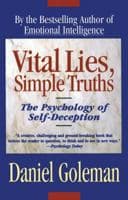
Bestselling author Daniel Jay Goleman is also a psychologist, lecturer, and science journalist. Born in 1946 in Stockton, California, Goleman graduated magna cum laude from Amherst College. He earned his Ph.D. at Harvard. A pre-doctoral fellowship and post-doctoral grant allowed him to study in India. His travels in India and Sri Lanka were the subject of Goleman's first book. Once a visiting lecturer at Harvard, he moved on to a job at Psychology Today and later to a position writing about psychology and brain science for The New York Times. He was nominated twice for a Pulitzer Prize. Goleman is the author of more than ten non-fiction books on psychology, leadership, science and other topics. Goleman's book Emotional Intelligence spent more than eighteen months on The New York Times Best Seller list. He currently co-directs the Consortium for Research on Emotional Intelligence at Rutgers University.
This book an overview of the major different meditation paths and would appeal to those who have a questioning mind - its analysis of the various paths is quite objective. If you are looking for general guidelines and a justification of the positive aspects of meditation this book is definitely worth reading.
In THE MEDITATIVE MIND: THE VARIETIES OF MEDITATIVE EXPERIENCE Daniel Goleman does an even more comprehensive job of covering his subject matter than William James did in his classic study of relgion,THE VARIETIES OF RELIGIOUS EXPERIENCE. Goleman covers a wider range of experiences and -- given that psychology has come a long way since James'day -- provides a more detailed analysis. This book ranks with Aldous Huxley's THE PERENNIAL PHILOSOPHY as a modern classic on spiritual paths. He makes a good case for meditation as an ancient "psychotechnology" (my words, not his) for the transformation of consciousness. He cuts through the superficial differences in meditative practices, and points out what all of them share at the core: the retraining of attention.
I found this book 5 years ago and have really not found another book which is better at describing complete path with such clarity, and richness. I think this book is extremely helpful for all meditators who are interested in seeing where they are on the path. For without a map, it is extremely easy for any meditator to become lost and not make any real progress. This book in my opinion can also be used to assess the presence of authentic teachers, someone who has traversed at least 4 levels of absorption, have seen validity attachment in cause of suffering, have begun purification of their bodies as well as their minds, and have experienced true emptiness and not fallen into attachment afterwards.
Good overall book of meditation. Goleman makes the distinction between the two major types of meditation: Concentration and Mindfulness. He also gives a pretty thorough description of the Visuddhimagga mind maps. He goes on to describe Hindu Bhaki, Jewish Kabblah, Christian Hesychasm, Sufism, TM, Ashtanga, Tantra and Kundalini Yoga, Tibetan Buddhism, Zen, Gurdjeiff and Krishnamurti
1. The distinction between concentration and mindfulness as forms of practice has never in my reading experience been so clearly stated. (My meditation library is extensive and my practice is 7 years old.) 2. The stages of insight work -- also, the clearest presentation in my reading experience. Particularly helpful were the discussions on "visions" (p. 12) and pseudonirvana (p. 26). 3. Part IV: The Psychology of Meditation -- This is a gem. Ties in beautifully with _Emotional Intelligence_ (another Goleman treasure). The "altered states or altered traits" of consciousness discussion (pg. 172-5) is the best explanation of the "3rd foundation of mindfulness" I have seen. Summary: If you are interested in how your practice fits into the grand scheme of practices or looking for a menu to chose from, this is the book. If you want a clarification of the path at the center of all practices, no where else have I seen a better presentation. This! ! is a seven star book as is _Emotional Intelligence_.