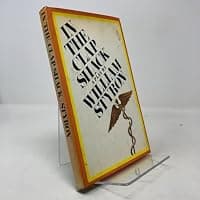
The story that inspired the major motion picture The Birth of a Nation (2016) In the late summer of 1831, in a remote section of southeastern Virginia, there took place the only effective, sustained revolt in the annals of American Negro slavery... The revolt was led by a remarkable Negro preacher named Nat Turner, an educated slave who felt himself divinely ordained to annihilate all the white people in the region. The Confessions of Nat Turner is narrated by Nat himself as he lingers in jail through the cold autumnal days before his execution. The compelling story ranges over the whole of Nat's Life, reaching its inevitable and shattering climax that bloody day in August. The Confessions of Nat Turner is not only a masterpiece of storytelling; is also reveals in unforgettable human terms the agonizing essence of Negro slavery. Through the mind of a slave, Willie Styron has re-created a catastrophic event, and dramatized the intermingled miseries, frustrations--and hopes--which caused this extraordinary black man to rise up out of the early mists of our history and strike down those who held his people in bondage. This description may be from another edition of this product.
Whether fictionalizing a slave uprising in The Confessions of Nat Turner or breaking the silence on clinical depression, William Styron's work inspired not only accolades but national dialogues.
I feel like it’s important for everyone to learn about Nat Turer and all the atrocities he endured.
0
★★★★★
A brilliant work of imagination, not a history book
By Thriftbooks.com User, September 10, 2001
The Confessions of Nat Turner is one of Styron's most powerful works, a fascinating exercise in imagination. Styron begins with a true historical event -- a slave rebellion that struck terror into the hearts of white southerners before ultimately being quelled. Styron sees in the psychological tinder box ignited by the rebellion, and in its leader, Nat Turner, a little-understood passion play. Critics who complain that Styron doesn't answer some historical questions: "Gee, Nat's owner didn't treat him so bad, why'd he rebel?" miss the point. What fascinates Styron, and a careful reader, is what the fact of rebellion does to the minds and emotions of those it touches. Besides, anyone who finishes Styron's novel without a sense of why Turner led the rebellion wasn't reading very carefully; the whole novel turns on Styron's hypothetical answer to this question. One of the central conceits of the book is Styron's imagination that Turner could have been fueled by his sense that he had been chosen by God to lead his fellow slaves in an uprising. Styron paints a powerful picture of one driven by the conviction -- whether divinely inspired or delusional -- that he is a vengeful avatar called upon by a higher power to wreak vengeance on the perceived enemies of God. There is an obvious parallel here to the Harper's Ferry uprising led by John Brown (whom Russell Banks, in Cloudsplitter, depicts as similarly driven by mania), as well as to figures like Joan D'Arc. Styron, who wrote a moving memoir discussing his own struggle with mentally illness, has a special fascination with, and sensitivity to, such issues.
5
★★★★★
Emotional truth
By Thriftbooks.com User, March 12, 2000
I have always admired Styron's bravery in handling difficult subjects. Styron is a novelist in the classic tradition, and is concerned with depth of theme and pyschological motivation--two things that are sneered at in todays academic climate. Yes, it is a problem straying into the political arena--but Styron achieves the important task of humanising Nat Turner--making him real, and not some dusty abstract fictional personage--consigned to the footnotes of History. Racism has many faces, and as I read Styron's novel, I became angrier and angrier, as the palpable, grinding and dehumanising aspects of America's slave legacy was unfolded in Nat's story. The ending was incredibly powerful. I urge people, of all creeds and colours, to read this book and keep an open mind. Styron is NOT a racist, but a HUMANIST.The story he tells has eternal relevance, and is told with integrity and great literary skill. A book should stand alone, but I hope some day that this novel is made into a film. Its story is too important to remain locked within the literary arena.
3
★★★★★
Haunting and lyrical...
By Thriftbooks.com User, February 26, 2000
It's a shame that this book has been shrouded in accusations of racism and bigotry, because it detracts from the simple fact that "Nat Turner" is a beautifully written, impressively narrated and horribly affecting novel. Styron's Nat is a fully realized, memorable and finely-drawn character, whose insights into slavery and human nature in general, linger long after the closing words. In the end he emerges, not so much as a hero, but as a human pushed to the brink by circumstances beyond his control. An essential read for anyone who enjoys novels which plumb the depths of the human condition.
2
★★★★★
Slavery breeds violence, violence breeds slavery.
By Thriftbooks.com User, January 10, 1997
Written in 1968, Styron's "Confessions" delves deep into the psychology behind Nat Turner's 1831 slave revolt. Almost unbearable in its graphic violence and Biblically-dimensioned heartbreak, the novel (for it *is* fictional) has Turner telling the whole story in painfully honest detail. Styron neither defends Turner nor paints him as crazy; he is less interested in pointing out right or wrong than in trying to understand the broad ironies of the system of slavery and its effects on the people who ran it and were subject to it. Styron's Nat Turner is a man who is both educated and destroyed by his masters; he is both uplifted and misled by the Bible. His hatred is not fueled by the hatred of whites, but by the pity of whites. And when he kills, he is only able to commit one physical murder, though he takes responsibility for 60. The book is often painful to read, especially for one who might think that race relations today have little to do with 19th-century slavery. But in its wealth of detail and its ability to enter into the mind of a complex and criminal mind, it is unique, and should be required reading for every self-termed patriotic American.