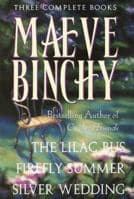
The Journey -- Every Friday night young Ron Fitzgerald's lilac-colored minibus leaves Dublin for the Irish country town of Rathdoon with seven weekend commuters on board. All of them, from the joking bank porter, Mikey Burns, who plays the buffoon while his brother makes a fortune in the family business, to the rich doctor's daughter, Dee Burke, who is having a secret affair with a married man, have their reasons for making the journey. The Destination, Rathdoon, is the kind of Irish Village where family histories are shared and scandals don't stay secret for long. And this weekend, when Tom's bus pulls in, the riders find the unexpected waiting for them... as each of their very private lives unfolds to reveal a sharp betrayal of the heart, a young man's crime, and chance for new dreams among the eight intriguing men and women on... The Lilac Bus,
Born in a small town in Dublin County, Ireland in 1940, Maeve Binchy Snell earned a B.A, degree from University College, Dublin. She worked as a history and Latin teacher in Dublin, then as a news reporter at The Irish Times. In the early 1980s, she published her first novel, Light a Penny Candle, using her maiden name Maeve Binchy as her pen name. She was the author of sixteen novels, many of which were international bestsellers, as well as radio dramas and television screenplays. One of her most successful novels, A Circle of Friends, was adapted into a movie of the same title, starring Minnie Glover and Chris O'Donnell. Tara Road, another bestseller, also became a film, starring Andie McDowell and Olivia Williams. Among the many honors she received, Binchy was awarded both the British Book and Irish Book Lifetime Achievement awards. She died in 2012, and her last book, A Week in Winter, was published later that year.
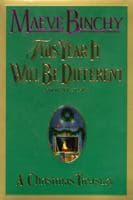
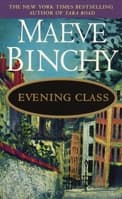
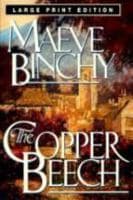
It's a fabulous book, engrossing, intriguing and everything. But there's an aspect I just can't agree with the publishers: "The Lilac Bus" is definitely not a story collection. "Victoria Line, Central Line" (also known as "London Transports"), "Dublin Four" or "This Year It Will Be Different" are good examples of this kind of work, not the case of "The Lilac Bus" though. A short story is isolated from the other ones in the same collection, each chapter has its own beginning and end, although they are normally gathered because they belong and are related to a main, general theme (e.g. several parties taking place at the end of the year/women who are professionally and financially independent). That's not the case in this story about eight people who travel every weekend from Dublin to the same destination (a pretty village called Rathdoon) in a lilac-colored minibus. All the characters have their lives more or less intertwined with the others. Each chapter belongs to a different character, but they are linked - an interesting resource similarly used by the author in "The Copper Beech", "Silver Wedding" or "Evening Class" - and these are all novels, not short stories!Every time a new chapter starts the author goes back in time to focus on the same weekend, of course from a different perspective. That's because such weekend is particularly special to all of the passengers, so they are even connected in terms of chronology as well. They meet throughout the weekend, they think and wonder at times about these people who share the same bus, the chapters are not separate different stories. Obviously each of them have their own special reasons for travelling home, their own points of view, secrets and mysteries that are discovered as each chapter is unfolded. It's really silly to classify this book as a collection of short stories then. All right, it's much shorter than other very long novels such as "Light a Penny Candle" or "The Glass Lake" which are full of details. Never mind, it is just more compact, but still a very good, pleasant, enjoyable read. Call it a "short novel" if you prefer - but nobody needs to be an expert, a literature specialist to notice that's not a collection of short stories.
0
★★★★★
Excellent Storytelling.
By Thriftbooks.com User, August 23, 2001
I have, to my surprise, found some of Binchy's books to be a little sketchy. After reading Tara Road, I wondered if perhaps that book had been authored by a distant cousin or mayhap a complete stranger to Binchy's talent. I would not have recognized the author of that book to be the same artist who created The Lilac Bus. This is great storytelling. Each vignette represents a short period in the life of one of the characters. Since each character has their own voice in their own story and then is also "remembered" by the other characters in _their_ stories, you walk away from this novel feeling as if you had been to visit for a weekend. Many scenes are shared by the characters so you are able to experience many moments through different pairs of eyes each time for a deep, rich and very compelling experience.This is probably my favorite Binchy novel along with Evening Class. I will hope for more like it.
0
★★★★★
A Trip Across Ireland like the Lonely Planet!
By Thriftbooks.com User, January 9, 2000
A vicarious adventure riding the Lilac Bus back and forth across Ireland, only the reader gets to crawl inside the lives of each of the passengers. Maeve Binchy's insights and exquisite writing are perfectly matched with Kate Binchy's melodious Irish tones. You will feel like you know these people and that the journey has been a special vacation. This story is the neatly crafted -- though it does not wrap every thing up in a nice tidy package at the end (that never really happens in real life)! Human, full of hope, humor, faith and caring, but if you want a thriller, look elsewhere.
0
★★★★★
Disappointing and unfinished
By Thriftbooks.com User, June 15, 1998
I loved "Evening Class". I enjoyed "Light a Penny Candle". Then I read "The Lilac Bus". It was very disappointing because it seemed incomplete and unfinished. For a writer who tied up all loose ends as carefully as Maeve Binchy did with the characters of "Evening Class", why does she leave the chartered bus travelers' histories just twisting in the wind? And then she follows this with several short stories that also appear to have no conclusions--I don't get it. I felt cheated.
0
★★★★★
These are people I'd like to live next door to.
By Thriftbooks.com User, April 8, 1998
If you want Ireland without actually getting on a crowded Aer Lingus flight and going there, this book will give it to you. If you want to meet the treasures of the Celtic race without all the rain and the pub smoke, try dipping into The Lilac Bus. These are the real people of Ireland: funny, stingy, generous, troubled, but always interesting. Maeve Binchy may have just gone around her own home town and described the average inhabitants. You'll feel like you've gone and stayed with Binchy for a week or so and met all her fascinating neighbors.