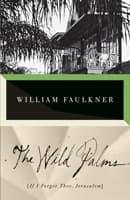
A shocking act of murder and arson in Prohibition-era Mississippi entangles an assortment of memorable misfits in this novel from Nobel Prize winner William Faulkner. With a new introduction by Jay Parini.Sweet, hopeful Lena Grove has trekked miles on foot in search of the runaway bootlegger who fathered her unborn child. In the town of Jefferson, she finds instead shy and honorable Byron Bunch, who assists Lena in her quest while quietly adoring her. The town's history-haunted outcasts include disgraced Reverend Gail Hightower, plagued by visions of his Confederate grandfather; Joanna Burden, a despised descendant of abolitionist carpetbaggers; and Joe Christmas, a desperate drifter tormented by his suspected mixed-race ancestry. As these characters converge, Faulkner vividly depicts a world in which no one can escape the weight of the past.
Nobel-Prize-winning writer William Faulkner was born into an old Southern family in 1897 and grew up in Oxford, Mississippi. He never finished high school. Faulkner joined the British Royal Air Force during World War 1, changing the spelling of his surname from Falkner to Faulkner. After the war, he studied at the University of Mississippi, and held a variety of jobs from bookstore clerk to reporter. Faulkner's main efforts, however, focused on writing stories and novels. After publishing several books including The Sound and The Fury and Light in August, Faulkner took up screenwriting as a way of earning money. He traveled to Hollywood intermittently to fulfill his obligations, but kept his home in Mississippi. One of the most important American writers and strongly associated with the South, Faulkner earned several National Book Awards and two Pulitzer Prizes in addition to the Nobel Prize for Literature (1949). He died in 1962.
After reading Faulkner's four major masterpieces -- The Sound and the Fury; Absalom, Absalom!; As I Lay Dying; and Light in August -- I've come to the conclusion that Light in August is far and away the easiest to read, has the most dramatic plot, the most intriguing primary characters in Joe Christmas, Gail Hightower and Joanna Burden, and even some of his most intriguing minor characters in Uncle Doc Hines and Mr. McEachern. Overall, it is his most readable and likeable masterpiece. And it leaves you wanting so much more. The complex and ambiguous character of Joe Christmas alone could have been the source of three or four novels detailing different times in his life. While Christmas is hardly a likeable person, he is fascinating, hypnotic, a train wreck; you can't keep your eyes off him. His actions are morally ambiguous and inconsistent and yet fully understandable within his nature. As a creation he deserves to rank with Huck Finn, Tom Sawyer, Captain Ahab and Jay Gatsby in the pantheon of American literary characters. Faulkner has a big mission here. The novel exposes the evils of racism both in the South and among white, northern abolitionists. It traffics in religious symbolism while savaging religious fanatacism. And it leaves one with a great deal of memorable violent and sexual imagery. And that's just for starters. This book is deep, and while it's storytelling is largely non-linear, it is far more palatable than the other three, which tend to be confusing and obscure. Enjoy this one. If you've never read Faulkner, it's a great starter.
1
★★★★★
Readable and Riveting.
By Thriftbooks.com User, June 19, 2005
I always recommend Light in August to people who say that Faulkner is impenetrable. Here the pages flow effortlessly by and the story line is easy to follow. There's none of the interior monologues that so confuse and derail those picking up the southern master for the first time. This plot is more traditional and will be readily appreciated by the average person.
1
★★★★★
Faulkner's Most Likeable Masterpiece
By Thriftbooks.com User, April 3, 2005
After reading Faulkner's four major masterpieces -- The Sound and the Fury; Absalom, Absalom!; As I Lay Dying; and Light in August -- I've come to the conclusion that Light in August is far and away the easiest to read, has the most dramatic plot, the most intriguing primary characters in Joe Christmas, Gail Hightower and Joanna Burden, and even some of his most intriguing minor characters in Uncle Doc Hines and Mr. McEachern. Overall, it is his most readable and likeable masterpiece. And it leaves you wanting so much more. The complex and ambiguous character of Joe Christmas alone could have been the source of three or four novels detailing different times in his life. While Christmas is hardly a likeable person, he is fascinating, hypnotic, a train wreck; you can't keep your eyes off him. His actions are morally ambiguous and inconsistent and yet fully understandable within his nature. As a creation he deserves to rank with Huck Finn, Tom Sawyer, Captain Ahab and Jay Gatsby in the pantheon of American literary characters. Faulkner has a big mission here. The novel exposes the evils of racism both in the South and among white, northern abolitionists. It traffics in religious symbolism while savaging religious fanatacism. And it leaves one with a great deal of memorable violent and sexual imagery. And that's just for starters. This book is deep, and while it's storytelling is largely non-linear, it is far more palatable than the other three, which tend to be confusing and obscure. Enjoy this one. If you've never read Faulkner, it's a great starter.
2
★★★★★
The South rises
By Thriftbooks.com User, July 16, 2000
Nothing is ever simple in a Faulkner book. However plainly the people talk, however straightforward that the situations seem, there are layers and layers of things to dig through to find the ultimate truth, if indeed there is any. I've already read Sound and the Fury and as glorious as that book was, this novel absolutely captivated me. It's Faulkner's way with words, he's not flashy like some contemporary authors, preferring to slowly wind his way into your consciousness with his gift of writing. It's only as you read, maybe as you peruse a passage for the second time do you see the little details that you missed the first time out, the choice of a word here, the flow of a paragraph. And his characters, all beautifully drawn, with flaws and cracks and everything, but even the farthest gone of his lowlives has some pearl of wisdom to impart, his pillars all have dark secrets. In short they're just like his, if we lived in the South at the turn of the century. Faulkner captures it all, weaving his characters together with the skill of a master, no seams showing, everything seeming to happen naturally. Even when the story detours to tell someone's backstory, it seems to come at the perfect moment. If I sound a bit fawning, that's because this book deserves it, nothing puts together the picture of a time better than this, and as an aspiring writer I am in sincere awe of Faulkner's ability to reflect even the more complex of emotions with a word or a sentence. He has to be read to be believed and it definitely must be experienced. Just immerse yourself in a time and place thought long gone, that still lurks in the corners of people's thoughts and the traditions that never die.
5
★★★★★
A highbrow tear-jerker
By Thriftbooks.com User, February 10, 1998
Faulkner again proved himself a master of American literature with his tragic story of Joe Christmas, a truly unlucky and unloved fellow whose life of rejection has led him to make some truly unwise choices. Crafted in Faulkner's signature intellectual, sometimes verbose, style, this novel is an important examination of some major flaws in the typical American character. We all identify with the characters in this book.