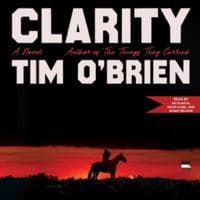
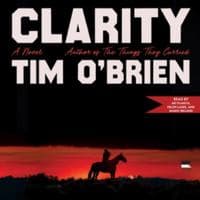
A CLASSIC FROM THE NEW YORK TIMES BESTSELLING AUTHOR OF THE THINGS THEY CARRIED
To call Going After Cacciato a novel about war is like calling Moby-Dick a novel about whales. So wrote TheNew York Times of Tim O'Brien's now classic novel of Vietnam. Winner of the 1979 National Book Award, Going After Cacciato captures the peculiar mixture of horror and hallucination that marked this strangest of wars. In a blend of reality and fantasy, this novel tells the story of a young soldier who one day lays down his rifle and sets off on a quixotic journey from the jungles of Indochina to the streets of Paris. In its memorable evocation of men both fleeing from and meeting the demands of battle, Going After Cacciato stands as much more than just a great war novel. Ultimately it's about the forces of fear and heroism that do battle in the hearts of us all. Now with Extra Libris material, including a reader's guide and bonus content
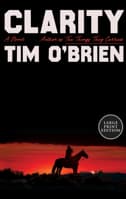
The Things They Carried, a semi-autobiographical collection of connected short stories first brought Tim O'Brien to the attention of critics. Another work inspired by his experiences serving in Vietnam, Going After Cacciato won the National Book Award. William Timothy O'Brien was born in 1946, grew up in small town Minnesota, and graduated from Macalester College in 1968 with a B.A. in political science. O'Brien was drafted into the U.S. Army in 1968 and sent to Vietnam, where he served from 1969 to 1970 and was sent home with a Purple Heart. Returning to the U.S., he attended graduate school at Harvard University and served an internship with the Washington Post. While at Harvard, his first book, the memoir If I Die in a Combat Zone, Box Me Up and Ship Me Home was published in 1973. O'Brien spent a year the Washington Post and then turned to writing full-time. His many honors include the Dayton Literary Peace Prize lifetime achievement award, a Guggenheim fellowship, and two National Endowment for the Arts fellowships. He lives in central Texas.
This novel reads like a fever dream and I did not expect that ending. ⁹
0
★★★★★
War like you've never (or always) seen it
By Thriftbooks.com User, March 31, 2006
The Vietnam war continues to bring back painful memories to millions of Americans. Few artists have captured the essence of the war as accurately as Tim O'Brien. In his book, Going After Cacciato, O'Brien tells the tale of Spec Four Paul Berlin and his squad's pursuit of an AWOL soldier named Cacciato. Cacciato decided to leave the war and head for Paris...conveniently located 8,000 miles away. As the squad chases after Cacciato, O'Brien dives into Berlin's first experiences with the war, exposing the fear, courage and attitudes of everyday soldiers. While appearing humorous in nature, which it is at some points, Going After Cacciato is much more than a lighthearted adventure. It takes on the heavy subject of war and its effects on every day soldiers with an intelligent zeal and brutal truthfulness. O'Brien structures his book in an odd manner, jumping between the chase after Cacciato and flashbacks to various "war stories" involving Berlin and his squad. While at first somewhat jarring, as he usually jumps right when some major action is occurring, eventually it makes for a more interesting and exciting read. The war stories and the Cacciato plot work well together, mixing action sequences and thoughts on war and warfare, so that every chapter (or every other chapter) is fresh material. The inclusion of the war stories also accomplishes two things: 1) It includes Vietnam in the novel, as the majority of the Cacciato sections of the book occur outside of Vietnam; and 2) It gives O'Brien a chance to explore the lessons of war, an opportunity which he takes at every turn. The majority of the lessons learned in the "war stories" involve the death of a squad member. It's no secret that they died, in fact many of the deaths are alluded to from very early on in the book. Their significance comes not from their death, but from the circumstances surrounding it. From simple lessons such as, " `don' never get shot' " to brutal truths about squad assimilation, and the disturbing yet-sadly-ironic "ultimate war story", O'Brien covers the full threshold of emotions and experiences a soldier can go through during war time. O'Brien's major themes become apparent through these stories as well. His comment on loyalty, procedure, and the value of human life, for example, is brought up repeatedly through story of how "Lieutenant Corson came to replace Lieutenant Sidney Martin." In addition to bringing up his desired themes through the war stories, O'Brien also utilizes the character of Paul Berlin to illustrate the books numerous broader subjects. Paul Berlin will often question the war and life in general through a stream of consciousness at different points in the novel. These pages take the readers inside the mind of a soldier where they experience his thoughts, fears, hopes, and dreams. Here Berlin considers the disturbing events he and the others witness, "They did not know how to feel. Whether, when seeing a dead Vietnamese, to be happy or sad or relieve
1
★★★★★
Lives up to the hype - close to a masterpiece
By Thriftbooks.com User, March 28, 2004
This book is the perfect blend of fiction based on a very-real factual setting for the Vietnam War and a form of 'magic realism' akin to Gabriel Garcia Marquez to tell a powerful story and make a powerful condemnation of the war. What's most impressive is that this book was written before O'Brien had cut his teeth on later more successful books like 'Things They Carried.'Some reviewers have complained about the distortion caused by the intertwining storylines and shifts in time and focus, but they are not muddled at all and the book is very easy to maintain. This is what elevates the book beyond mere storytelling or fictionalized factual accounts. You can read other reviews for a synopsis of the story - my two-cents is that this book lives up to the hype and works to perfection. O'Brien is one of only two fiction writers still in their 'prime' so to speak and putting out books somewhat regularly that I will look for and buy (other being Phillip Roth).
0
★★★★★
One of O'Brien's Best
By Thriftbooks.com User, June 19, 2000
Tim O'Brien shows why he is one of the truly great writers of the 20th century. Going After Cacciato is a masterfully written novel that works on so many different levels. O'Brien reveals the mental strain and the incredible toll of war by showing how Paul Berlin uses the imaginary journey after Cacciato to escape the day-to-day horrors that he experiences in Vietnam and come to terms with his feelings about them. O'Brien's use of psuedo-flashbacks gives the story a decidedly surreal feel. He flawlessly weaves detailed, eloquent descriptions of the land and actions with "grunt-speak" and harsh depictions of everyday horrors. The resulting mix is quintissential O'Brien and will keep you enthralled to the end. Not just a novel for war story fans, Going After Cacciato should be read by anybody who enjoys literature.
0
★★★★★
O'Brien's best
By Thriftbooks.com User, December 28, 1999
This is one of my favorite novels of all time. I first read it in college, nearly fifteen years ago, and recently picked it up again. It can be read on many levels: a Vietnam story, a discourse on the absurdity of war, a study of human nature, etc.. O'Brien is a gifted writer, and while I also enjoyed The Things They Carried and In the Lake of the Woods, this book remains my favorite.
0
★★★★★
O'brien is an expert prose stylist
By Thriftbooks.com User, September 16, 1999
Whether or not this novel is important as a Vietnam novel seems to me to be irrelevant, or at least unimportant to me. "Going After Cacciato" is not simply an allegory of war, but also of the human instinct to join a group or cause. Cacciato represents individualism, self-interestedness, and idealism . He is, himself, and ideal or an aspiration. O'brien's novel changed the way I understand my reality. It challenged me to think outside of the group I was a member of and consider the legitmacy or appropriateness of membership. Read this book.