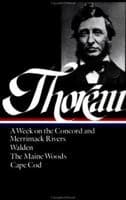
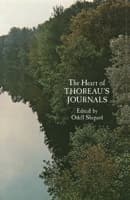
Excursions presents texts of nine essays, including some of Henry D. Thoreau's most engaging and popular works, newly edited and based on the most authoritative versions of each. These essays represent Thoreau in many stages of his writing career, ranging from 1842--when he accepted Emerson's commission to review four volumes of botanical and zoological catalogues in an essay that was published in The Dial as "Natural History of Massachusetts"--to 1862, when he prepared "Wild Apples," a lecture he had delivered during the Concord Lyceum's 1859-1860 season, for publication in the Atlantic Monthly after his death. Three other early meditations on natural history and human nature, "A Winter Walk," "A Walk to Wachusett," and "The Landlord," were originally published in 1842 and 1843. Lively, light pieces, they reveal Thoreau's early use of themes and approaches that recur throughout his work. "A Yankee in Canada," a book-length account of an 1850 trip to Quebec that was published in part in 1853, is a fitting companion to Cape Cod and The Maine Woods, Thoreau's other long accounts of explorations of internal as well as external geography. In the last four essays, "The Succession of Forest Trees" (1860), "Autumnal Tints" (1862), "Walking" (1862), and "Wild Apples" (1862), Thoreau describes natural and philosophical phenomena with a breadth of view and generosity of tone that are characteristic of his mature writing. In their skillful use of precisely observed details to arrive at universal conclusions, these late essays exemplify Transcendental natural history at its best.
This description may be from another edition of this product.
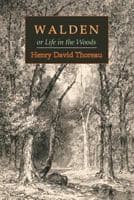
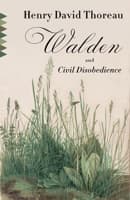
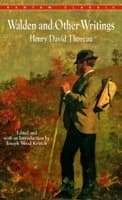
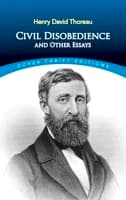
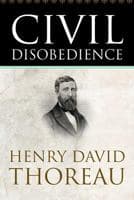
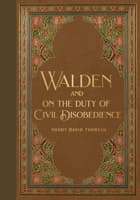
""How vain it is to sit down to write when you have not stood up to live,"" Henry David Thoreau once observed. The American poet, essayist and philosopher certainly held himself to that standard -- living out the tenets of Transcendentalism, recounting the experience in his masterpiece, Walden (1854), and passionately advocating human rights and civil liberties in the famous essay, Civil Disobedience (1849).
If you haven't read Rebecca by Daphne du Maurier, then shame on you. Although this novel can stand proudly on its own, it is actually a "companion" to the du Maurier classic about the tragic death of a woman named Rebecca. Rebecca ends when a fire claims her beloved mansion Manderley the same night an inquest has ruled her death a suicide. Rebecca's Tale begins twenty years later and builds on the questions deliberately left unanswered by the first novel. This novel can be read independently of du Maurier's work because Beauman deftly weaves the original story into the fabric of this one without compromising the sense of mystery or du Maurier's style, which she emulates, not imitates. Although somewhat darker than the original, it is no less readable. Beauman takes Rebecca's character to the depths only hinted at by du Maurier; in fact, at times it seems as though Rebecca may well have earned her fate. Beauman reveals Rebecca and her tale through four different narrators, including Rebecca herself. Each narrator is equally credible, but whose perspective is nearest the "truth"? This is a must read: Beauman's unique talent has resulted in a sequel that both lauds its predecessor and is an experience itself.
0
★★★★★
Rebecca's Tale
By Thriftbooks.com User, September 17, 2002
I have been an avid "Rebecca" fan since I was in high school and read my mother's first edition of Daphne DuMaurier's book. This new tale is absolutely wonderful and follows the first book to the n'th degree. This book continues where Rebecca left off. Max and his young wife (her identity still unknown) haunt Colonel Julian and other relatives in this highly entertaining follow-up. Caroline Bauman's characters are very well defined and the plot of the first book was a faithful rendering with her new novel. I could not find any discrepanicies between the first "Rebecca" and "Rebecca's Tale". I even brought out my worn old book to compare it with Rebecca's Tale. Bravo, bravo, bravo. Thank you, thank you for a very well told tale. I couldn't put the book down and god help my neighbor, should she fail to return it to me. It's a great read. The reader will want to re-read the original "Rebecca" to get the full flavor of the sequel.
0
★★★★★
Stunning and wonderful book!
By Thriftbooks.com User, October 23, 2001
For all those who were haunted by Rebecca DeWinter after they read DuMaurier's novel, here is a wonderful book that will answer all your unanswered questions. From the first paragraph I was hooked, wanting to read more about Rebecca's hidden secrrets. I have most of DuMaurier's Rebecca memorized, so I instantly caught on to this story. (I reccomend rereading DuMaurier's Rebecca)The main plot is basically the hunt for information on Rebecca DeWinter. Thomas Grey, a journalist, desperatly wants to know more about her past for an unknown reason, Inspector Juliyan, now an ancient and decrepit old man wants to clear up the rumors that have been spreading about Manderley for the past 20 years. This book drags the reader on this search for the truth about the mysterious Rebecca. After being almost on the verge of obsession with DuMaurier's classic book, I was finally able to feel at peace. Even though this is NOT by the original author, Sally Beauman captured the spirit of the way Rebecca was written. I was captivated by her book from the beginning to end.
0
★★★★★
COULDN'T PUT IT DOWN
By Thriftbooks.com User, October 18, 2001
The first chapter may have readers yawning, but keep going! Thirty pages in I couldn't put it down.
0
★★★★★
Superb Mystery
By Thriftbooks.com User, October 17, 2001
In this novel following in the footsteps of the famous REBECCA by Daphne du Maurier, Manderley is revisited in 1951, twenty years following Rebecca's death. Colonel Julyan, former magistrate for the districts of Kerrith and Manderley, had previously been involved in the inquest where Rebecca's death was ruled a suicide thereby exonerating her husband, Maxim de Winter. When a mysterious parcel arrives bearing Rebecca's notebook along with a postcard of her as a young child, the Colonel is forced to recreate his memories of Rebecca and Manderley where she lived. Adding to the reopening of old wounds is the presence of outsider Terence Gray, who seems to have a single-minded interest in the mystery of Rebecca's death. As Mr. Gray becomes the talk of Kerrith, and spinster ladies link him to Ellie, the Colonel's unmarried daughter, the Colonel receives more interesting parcels. Ellie, Gray, and Julyan are caught up in a web that is so intricate in its weave, the reader will not want to miss a word of their tale as hidden truths of the past are disclosed. Gray leads the reader on a merry journey in his quest for self-discovery leading to Rebecca and her haunting legacy. From her journals and first-person accounts of encounters with Rebecca, she remains as much an enigma as she did in Ms. du Maurier's novel. As the intensity of this read increases, so does the complexity of its characters. Those inhabitants of Manderley, who appear at first very commonplace, become so much more as the many layers of their personalities are carefully revealed. For a superbly crafted read with much mystery, some romance, and a pinch of the paranormal, REBECCA'S TALE is a must-read.