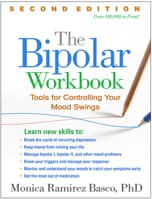
From leading scientist-practitioners, this pragmatic, accessible book provides a complete framework for individualized assessment and treatment of bipolar disorder. It addresses the complexities of working with individuals with broadly varying histories and clinical presentations, including those who have been recently diagnosed, those who are symptomatically stable, and those who struggle day to day to achieve symptom remission. Extensive case material illustrates proven strategies for conceptualizing patients' needs and working collaboratively to help them adhere to medication treatments, recognize the early warning signs of manic and depressive episodes, build coping skills, and manage specific symptoms. The second edition is a complete revision of the original volume, updated and restructured to be even more user friendly for clinicians. This description may be from another edition of this product.
The intended audience for this book are therapists, but the information is laid out in language that is accessible to the lay reader. It gives a very informative overview of what is involved and expected in cognitive-behavioral therapy in particular for those suffering from bipolar disorder. As a patient, I found it useful to read, even though it is not a self-help book. There is a workbook by Dr. Basco for people with bipolar disorder which is a self-help book that is very useful. I would recommend the workbook first for patients, followed by this book if they want to learn more.
1
★★★★★
Excellent book!
By Thriftbooks.com User, March 4, 2008
Having very little first hand experience with bipolar, this book really gave me a thorough understanding of the disorder and extremely useful clinical information for treatment plan development. I haven't found another source that is a comprehensive as this work. The treatment recommendations are simply awesome! Just wish there were more resources like this one. Excellent book!
0
★★★★★
Excellent resource -- a must -buy for your bookshelf
By Thriftbooks.com User, September 25, 2007
Finally, a book on CBT (cognitive behavioral therapy) for the rest of us! Everyone who deals with bipolar disorder will find Basco's work very helpful. I've read many books on CBT, including those by Ellis and his students -- they have great ideas, but they are not so easy to put into practice if you are cycling through the mood swings of manic depression. Basco customizes the CBT approach for bipolar and explains the process clearly. Multiple studies have shown this approach's usefulness. If you and your health care provider prefer a cognitive approach to help manage your bipolar symptoms, this book (now in paperback) is your best resource.
0
★★★★★
Excellent source of info on one aspect of bipolar treatment
By Thriftbooks.com User, March 18, 2003
This book should be read by anyone trying to optimize treatment of bipolar disorder through the use of cognitive-behavioral therapy. In fact it should be read both by patients and by therapists and possibly psychiatrists too. The book is well written, well organized, and fairly easy to understand. It is not intended to be a comprehensive guide to surviving bipolar disorder- if the reader wants a comprehensive guide, see Torrey's "Surviving Manic Depression" and Miklowitz's "Bipolar Disorder Survival Guide". But for just learning about cognitive-behavioral therapy, this book is excellent. Avery Z. Conner, author of "Fevers of the Mind".
0
★★★★★
Well Done!
By Thriftbooks.com User, January 2, 2000
This book states its' purpose, limitations, and offers a lot of helpful information on how to prevent hypomania and mild depression from escalating to full major depression and manic episodes. I believe that the book has a lot to offer in communication skills for everyone. It is helpful not only for therapist but for those afflicted with manic-depressive illness and their family members.