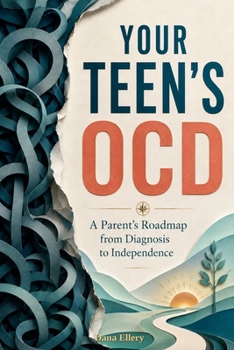
Your Teen's OCD: A Parent's Roadmap from Diagnosis to Independence

Repeated checking. Endless reassurance. Homework that never feels "right."
When these patterns begin taking over your teen's day, it can be difficult to understand what is happening or how to help. OCD can resemble anxiety, perfectionism, moodiness, or defiance, making it easy to miss.
Your Teen's OCD is a practical, parent-friendly guide to understanding the disorder, finding effective treatment, and supporting your teen's growing independence.
Inside, you'll learn how to:
Recognize possible signs of OCD. Understand the difference between ordinary teenage worry and patterns that warrant a professional evaluation.
Find knowledgeable support. Learn what a thorough OCD assessment should include and what to ask when choosing a clinician.
Understand treatment. Explore Exposure and Response Prevention (ERP), a central treatment approach for OCD, and learn how to ask informed questions about your teen's care.
Step out of the reassurance cycle. Understand how repeated reassurance and family accommodation can unintentionally reinforce OCD, and how to work with your teen's clinician on more helpful responses.
Handle difficult moments. Respond to meltdowns, refusals, setbacks, and reassurance-seeking with compassion while supporting treatment goals.
Prepare for greater independence. Navigate school support, driving, college, and relapse planning as your teen takes more responsibility for managing OCD.
Care for yourself, too. Protect your own well-being while supporting your child through a demanding process.
Written in clear, straightforward language and informed by established OCD treatment resources and clinical guidance, this book helps you understand what to look for, what questions to ask, and how to support recovery at home.
You do not need to become your child's therapist.
You need a clearer understanding of OCD, a treatment team you can work with, and practical ways to help your teen move forward.
Help your teen build a life with more room for what matters and less room for OCD.
This book is for informational purposes only and does not replace evaluation, diagnosis, or treatment from a qualified healthcare professional.
Customer Reviews
ThriftBooks ® and the ThriftBooks ® logo are registered trademarks of Thrift Books Global, LLC