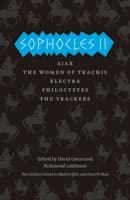
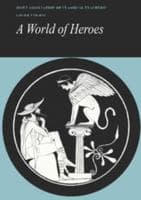
Sophocles' Trachiniae has traditionally been his least popular play, but it is now generally agreed that its tragic vision of life is perfectly compatible with that of his other dramas. The introduction to this important new commentary deals with the play's merits, the question of its unity, its treatment of the hero Heracles, the story's pre-Sophoclean tradition, and the evidence of contemporary art. Much of the commentary itself is devoted to textual problems that arise from the frequently corrupt and uncertain text, as well as wider issues of interpretation.
Sophocles (c. 497/6 – 406/5 BCE) was a towering figure in ancient Greek drama and one of the three great tragedians of classical Athens, alongside Aeschylus and Euripides. Born in Colonus, a village near Athens, Sophocles came from a wealthy family and was well-educated. He wrote over 120 plays, though only seven have survived in full, including Oedipus Rex, Antigone, and Electra. Known for introducing significant innovations to Greek theatre, he added a third actor to the stage (increasing dramatic complexity) and developed characters with deeper psychological realism. His works often explore themes of fate, divine justice, and human suffering, particularly within the context of family and moral responsibility. Sophocles served in various public roles in Athens and was highly revered during and after his lifetime, leaving a profound impact on the evolution of Western drama.
This is a stunningly beautiful translation of what is often thought to be Sophocles' weakest work. Captivating and lyrical, it paints beautifully the tragic tale of Hercules' death at the unwitting hands of his wife. The best, most poetic translation of a classic text I've ever read.
0
★★★★★
Thoughtful translation with exceptional additional material
By Thriftbooks.com User, April 7, 2000
Pound's translation is engaging, even if this is not the best of Sophocles's plays. This translation is historically important, however, in its advocation of drawing people back to the classics through lively and modern translations that go beyond strict literalism. Pound famously translates a line with a reference to concrete, and it works well in the play while being close to the ancient Greek. While not being literal, Pound captures the essence. This approach was more revolutionary in the 1950s than today, although it remains controversial. For those interested in Pound, definer of the modern movement in literature, man who revised Eliot and brought Joyce to acclaim, this is a vital volume. The foreword, introduction, and two afterwords deal (along with Pound's radical philosophy of translation) with Pound's imprisonment following World War II, during which he was in Italy and speaking for the fascist government. How to interpret this and even the level of intensity of fascism are long-pondered questions. After the war, he was kept in a cage in Italy ("and when it rained, it rained on old Pound") and then in a mental hospital where he was treated poorly. The material additional to the play largely deals with his then-present situation in the hospital, and is at times quite moving as well as being historically informative. This is not a volume for classical literalists; this is, however, a wonderful volume for humanistic readers of the classics as well as for those interested in this brilliant, though (or perhaps resultantly) mad, crucial (but increasingly overlooked) figure of the modern age.