


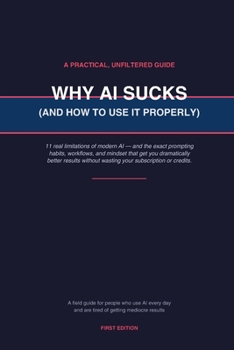
Why AI Sucks (and How to Use It Properly)

Somewhere between the breathless hype ("AI will replace every job by next year") and the reflexive
dismissal ("it's just autocomplete, it's all garbage") is where most people who actually use these tools
every day end up living. This book is written from that middle ground.
Modern AI systems - language models, image generators, video generators - are genuinely useful.
They can also be confidently wrong, expensive, inconsistent, forgetful, and frustrating in very specific,
very predictable ways. The problem is that most people learn these limitations the hard way: by wasting a
afternoon on a hallucinated citation, burning through a month's worth of image credits chasing a result
that never arrives, or watching a long AI conversation slowly forget everything it knew about their project.
This book has two parts. Part One is an honest, unflattering tour of what's actually wrong with AI tools
today - not vague complaints, but specific failure patterns you can recognize when they happen to you.
Part Two is the payoff: concrete techniques, prompt templates, and workflows that work around each of
those weaknesses so you get better output, waste fewer credits, and stop being surprised by the same
failures over and over.
Customer Reviews
ThriftBooks ® and the ThriftBooks ® logo are registered trademarks of Thrift Books Global, LLC
