


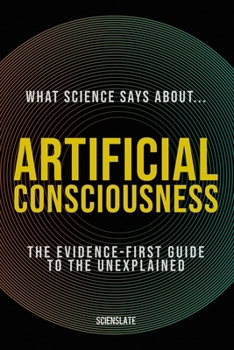
What Science Says About... Artificial Consciousness

Can a machine that says "I feel afraid" actually feel anything at all?
Large language models now describe fear, longing, and preference with startling fluency - convincing enough that engineers with full access to the code still can't agree on what's happening inside. What Science Says About... Artificial Consciousness takes that uncertainty seriously, tracing it back through neuroscience's own unresolved theories of mind.
What emerges is a graded, uncomfortable picture: architectures that partially match one theory of consciousness while failing another entirely, and a self-report problem that makes a system's own words worthless as evidence either way. The stakes are real - for how we design AI, and for who deserves moral consideration.
Inside, you'll discover:
Why fluent self-report from AI carries no evidential weight at allHow three rival consciousness theories reach different verdicts on one systemWhat the risks are of getting this wrong in either directionWhat Science Says About... delivers rigorous, evidence-first science writing for the intellectually curious.
Read the science before you trust the sentence.
Customer Reviews
ThriftBooks ® and the ThriftBooks ® logo are registered trademarks of Thrift Books Global, LLC
