Join the fun and frolic with American heiress Penny Nichols and her English hero Jeremy Laidley, as the adventurous couple sets off for more elegant travel and delightful sleuthing together Penny and Jeremy are just returning from their honeymoon, only to be greeted by eccentric friends of Prince Charles bearing a rather royal request: to rescue a historical village on the coast of Cornwall, England. A property developer is bulldozing his way across the countryside to build a monstrous new development, and he's heading straight for Grandmother Beryl's old homestead where the newlyweds first met long ago as kids. Can Penny and Jeremy solve an ancient puzzle in time to save Grandma's house-and the entire village-from total destruction? On the romantic rocky cliffs of Cornwall, amid Celtic lore and tales of Shakespeare, smugglers, and shipwrecks, Penny and Jeremy must contend with a rakish cast of local characters: a bird-watching earl, a famous TV chef, a vain actor, a New Age farmer, a pair of thuggish real-estate tycoons, a rebel rock-and-roller, and a band of determined "eco-warriors." Following a trail of cryptic clues, Penny and Jeremy's new caper takes them to the lush island of Madeira and the legendary castle of Tintagel, in a race against time to find the astonishing truth... before the wrecking ball strikes. With her trademark wit, wisdom, and verve, C.A. Belmond's newest novel in her beloved "Rather" series provides a perfect armchair voyage of Europe's glamorous locales, with plenty of mystery, history, food, wine, love, and life's little pleasures.
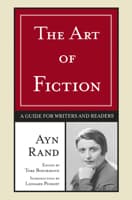
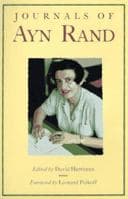
American novelist, playwright, non-fiction writer, and philosopher Ayn Rand was born Alisa Rosenbum in Petrograd (now St. Petersburg), Russia in 1905. By the time she completed her education at Petrograd State University, she had published her first essay and changed her professional name to Ayn Rand. Rand originally traveled to the United States on a visit to relatives in 1926, and decided to stay in the U.S. Determined to become a screenwriter, Rand settled in Hollywood and supported her writing by working at various positions in the film industry, including as an extra and as head of the costume department at RKO Pictures. She became a naturalized U.S. citizen in 1931. Rand's first novel was published in 1936. Rand found her first serious financial success with her worldwide bestselling novel, The Fountainhead, in 1943. She wrote the screenplay for the popular film adaptation produced by Hall Wallis and starring Gary Cooper. Rand's best-known work, the international bestseller Atlas Shrugged, was published in 1957. Rand's philosophy of Objectivism is cited by selected contemporary politicians and prominent citizens as a major influence on their thinking. Rand died in New York City in 1982.
Any illusions that communism works is destroyed in this book. A love story that tries to exist in this environment. The human spirit echoes throughout this great book.
0
★★★★★
First time ever hearing or reading ayn rand. Mainly have been reading thomas sowell and milton fried
By James, December 18, 2024
Verified Purchase
It's not about Russia it's about any dictatorship. The man vs the state. Good read. Read the foreword. First book I did that as well.
0
★★★★★
Beautiful, Magnificent, and Often Overlooked
By Thriftbooks.com User, August 23, 2007
I am a huge fan of Ayn Rand and while many of her readers think The Fountainhead, and especially Atlas Shrugged to be her best novels. I think We The Living is right along up there. This is a good deal smaller than Atlas Shrugged, but it still has a lot of power in it. This book is a tragedy. So do not read it if you want a happily ever after. While the story is filled with misery, you are still filled with a profound longing for a better world. That quality is something Rand puts in all her works. This book is not just about the evils of communism, it encompasses the entire spectrum of the 'individual vs. the state'. She shows what the state can do to a person, the state can grind a man down to nothing, it can leave an empty shell. And Rand shows what the state can't do to some people, the state can restrict a person, they can impose laws, they can cause tremendous suffering, but the state cannot always take away hope and desire even in the last few breathes one might take before they die.
1
★★★★★
An absolutely amazing book
By Thriftbooks.com User, May 11, 2004
There are a lot of people who dislike Ayn Rand. Whether for the rather didactic and lengthy sermons that populate most of the plots of her novels, or her own theories which tend to be underdeveloped and difficult to understand, she is not the most popular author or person in the philosophical realm. We the Living, however, is a book that one must read in order to change the perception of Rand doing what she does best: writing fiction. The novel is a harsh look at communism in the post-Red revolution of Russia, following three people: Kira, a young, idealistic, woman who bourgeois family was left poverty-stricken following the revolt; Leo, an indifferent young man haunted by the Communists due his late father's war glory; and Andrei, a Communist questioning his own beliefs in the system he has risen up in so quickly. Despite the fact that this novel is set in a far-away time and place to most of its readers, it is a book which I felt an extremely strong connection with. Everybody knows a Leo: flippant, handsome, could get any girl he wants -- but he has serious character flaws, and tends to be abusive of Kira's love for him. And Kira, the novel's protagonist, is very similar to any youth of today: she does not understand the ideals of the Communist party, but she does know what she believes and is wholeheartedly committed to fulfilling the promise she had at birth. The entire novel is beautifully written in moving prose that reflects both the harsh conditions for the people of Russia and the emotions felt between Kira, Andrei, Leo, and others as they attempt to make life better for themselves in a regime that denies them anything good without punishment. The climax of the novel is breathtaking -- by the time the final words have been read, the reader is totally attached to the characters. As with any other great novel of its time, We the Living not only characterizes the time period it is based in, but its characters live on as people of today's world, in today's capitalistic society. It questions the principles of freedom and what people will do for that freedom. This is Rand's greatest work: the philosophy is subtle, with more emphasis on the plot and the characters, but is there. Whatever you may think of Ayn Rand, you must read this novel -- it is a moving portrait of human life.
2
★★★★★
An important reminder of what communism really is
By Thriftbooks.com User, March 1, 2004
One thing always there but often not noticed in Ayn Rand's other works is an amazing sense of the environment. One really feels like one is living in the worlds Rand creates. This is particularly noticeable in this book, and it gives the reader a great awareness of what it is like to live under communism. Not only are the results of communism evident, but so are clear links to the cause (the absence of human rights). On top of all this, We the Living has great characters whom we get to observe as they change (or not, in Kira's case) under the brutal regime.
0
★★★★★
I felt like I was meeting Ayn Rand in person...
By Thriftbooks.com User, March 26, 2002
Ayn Rand said that "We the Living" was the closest she would ever come to writing an autobiography. Maybe that's why when I was reading WTL I got the impression that I was witnessing real scenes from Ayn's past life under the Soviet system. The uncompromising and highly principled behavior of the main character, Kira is inspiring and horrible to witness when you realize what she was up against(communist rule).Kira is not the superhero type Rand would create so well in The Fountainhead and Atlas Shrugged, but she was as close as you could expect to find in Soviet Russia. And unlike Rand's later fiction, WTL has a sad ending... an ending which really drives home the point of how collectivism's ultimate result is death -- death of the mind, death of the individual, and eventually death of everything good in society.It kept me up nights reading and many more nights pondering what it all meant. A great read!