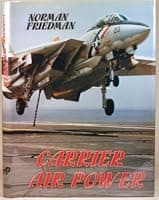
This fully illustrated series offers detailed descriptions of the evolution of all classes of the principle U.S. combatant types, as well as plans, profiles, and numerous detailed photographs.
This is the best book I have found on the US Air Craft Carriers. It gives a complete review of carriers untill the late 1970s. I wish the auther would edit it to include, the newest carriers up to the latest ship the GR Ford.
0
★★★★★
Excellent overview
By Thriftbooks.com User, September 5, 2006
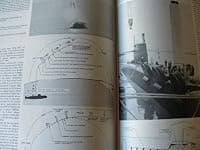
For years, Friedman has set a standard for naval ship subjects. This design history is full of clear quality photos, very nice line drawings by Baker and overviews of the many aircraft carriers. There are also design charts, specifications and lists of ships in the appendices. Just enough information to keep your interest without going too far. An excellent starting point for one's quest to research an individual ship.
0
★★★★★
The masterpiece on U.S. Aircraft Carrier development.
By Thriftbooks.com User, January 20, 2005
I've read just about every book I can lay my hands on concerning the Essex class aircraft carrier and though this magnificent book envelops each American carrier it is far (FAR) more superior to the mediocre Essex-Class Carrier by Alan Raven, regardless that Alan Raven's book is dedicated to the Essex alone. Many believe that Raven's book is the standard for the Essex class carrier but it falls far short when compared to this brilliant masterpiece. Please take my word for it - do NOT spend the $100.00 for Alan Raven's Essex-Class Carrier unless you want a photograph of a radar antenna and save yourself about sixty dollars and months and months of dead-end research and buy this outstanding piece of work instead.
0
★★★★★
Superbly Detailed and Fascinating
By Thriftbooks.com User, March 6, 2003
This volume, one of many in Norman Friedman's naval design histories, is amazingly thorough in its coverage of U.S. aircraft carrier design from the 1930s-era Saratoga and Lexington through the nuclear-powered Nimitz-class, as well as the offshoot amphibious assault carriers.The book is filled with design schematics, ships' specifications and more esoteric naval information than you could possibly absorb in a lifetime. The rich wealth of information is the consistent strength of this series that makes it a bit overwhelming for the casual reader looking for a narrative history of U.S. carrier. The emphaisis here is on ship design, its impact on operations and little else. If there is any shortcoming to be found within the book, it is that it is rather old, having been last updated in 1983, when the Nimitz class was just hitting its stride and long before the design innovations fueled by the Navy's growth in the waning years of the Cold War.
0
★★★★★
Aircraft Carriers
By Thriftbooks.com User, November 30, 1999
This is an excellent book for those who want technical information about the US Navy Aircraft Carriers. The book covers detail information about the design, construction, and modifications of all of the classes of US carriers built since the beginning of carrier aviation. In addition, the book covers other designs the US Navy thought about but never bothered to build. This book is not for the novice but for those who need detail technical information, this is the book to get.