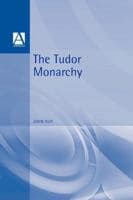
John Guy here provides the most complete narrative history of Tudor England in more than 30 years. A compelling account of political and religious developments from the advent of the Tudors in the 1460s to the death of Elizabeth I in 1603, his authoritative study discusses the far-reaching changes in government and the Reformation of the Church under Henry VII, Edward VI, Mary, and Elizabeth, and is enriched with illuminating character studies of the monarchs and politicians of the era. Taking into account new debates on the progress of the English Reformation and the strengths and weaknesses of Tudor Government at a local and national level, the book includes contextual analyses of the Tudor English economy, society, and political culture.
In the preface to this book, John Guy states that one of his aims in writing it was to provide "a clear narrative account of the period of English history from 1460 to the death of Elizabeth I in a manner equally accessible to the general reader and to the student." In this the book is an unqualified success; though the author presumes some familiarity with the era, it is a great narrative of England during their reign, presenting complex events in a straightforward and comprehensible manner. Guy's focus is primarily on political and religious themes of the period, though he includes chapters on the economy, society, and culture as a means of fully developing his argument. Such an approach is understandable, given that the development of the state is one of the major events of 16th century England. The key figure in this, as with so much else in Tudor history, is Henry VIII, whose innovations would be felt for the remainder of the century. Written with clarity and wit, Guy's book is the best single-volume history of the Tudor era. My only complaint is that, given his other professed goal of offering a synthesis of current research, a new edition is needed to maintain the book's usefulness as a survey account. I can only hope that Guy does so before too many readers dismiss what is otherwise an excellent overview of Tudor rule.
0
★★★★☆
Should be "Politics in Tudor England"
By Thriftbooks.com User, March 2, 2004
If you want a good overview of Tudor politics & gov't, then here's a fine book. But don't look for a general history of the period here.
0
★★★★★
Fantastic description of the whole period
By Thriftbooks.com User, July 31, 1999
This book is excellently written, and will really appeal to anyone who is interested in the Tudors. Professor Guy's book is essential for anyone wishing to study this period, as this one volume covers religion, politics, society and the economy. He has a good style of writing and each topic flows smoothly into the next, giving a valuable insight into both the policies and the characters in this period.
0
★★★★☆
A scholarly, thorough review of Tudor politics and society.
By Thriftbooks.com User, July 21, 1998
John Guy is a fine scholar and an adequate writer. His analysis of Tudor society and government thoroughly convinces the reader of his sound understanding of Tudor history. At points he assumes his audience has more knowledge of Tudor policitics than this reader had. He analyzes membership and conflicts in the Privy councils in more depth than most people reading for pleasure will want. But the work will, on balance, entertain and fascinate any patient reader with its many perspectives on those famous Tudor monarchs.