


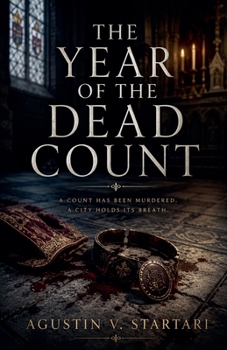
The year of the dead Count

Bruges, 1127.
A count is murdered while at prayer. Before the day is over, Bruges has begun to divide.
Lambert has spent his life believing that ordinary men can survive the quarrels of lords by knowing when to speak, when to kneel, and when to stay inside their own doors. His eldest son no longer believes him. His daughter sees danger entering through kitchens, marriages, parish doors, and old obligations. His youngest is still young enough to mistake violence for history.
The assassins fortify themselves. Armed men gather. Houses change hands. Oaths are demanded by men who may be dead or defeated a week later. And when one claimant to Flanders replaces another, every family must account for what it did while no one knew who had the right to command.
The dead count leaves no heir and no peace. He leaves a city in which memory becomes evidence, silence becomes suspicion, and survival itself can look like betrayal.
In 1127, Bruges does not fall. It learns how easily order can disappear.
Agustin V. Startari is an author and researcher whose historical fiction is grounded in his studies of history, political power, and historical sciences. His novels combine rigorous research with dramatic storytelling, exploring worlds shaped by conflict, hierarchy, loyalty, betrayal, and survival.
In The Year of the Dead Count, Startari brings medieval history to life through political tension, human ambition, and the fragile structures of power.
Customer Reviews
ThriftBooks ® and the ThriftBooks ® logo are registered trademarks of Thrift Books Global, LLC
