ISBN: 0714813338
ISBN13: 9780714813332
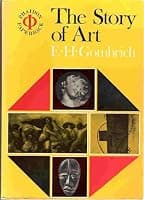
The Story of Art
$8.39
ISBN: 0714813338
ISBN13: 9780714813332
Formats
Conditions
A readable copy with all pages intact.
Formats
Conditions
A readable copy with all pages intact.
Conditions
A readable copy with all pages intact.
Formats
Conditions
A readable copy with all pages intact.
Don’t get me wrong, there are some interesting things in this book. It’s also pretty well written and easy to follow. But wow, this is a textbook example of racism in art history. It was written a very long time ago, yes, but that is very prevalent in how the author discusses “primitive” and “savage” communities. He has some very ignorant things to say about “the people of Africa” (and yes, he does use the N slur). It’s a good read to use as a kind of case study for the racism in European art history texts written in this time period.
Originally, Dr. Gombrich intended (in the 1940s) for this book to be read by high school students; or as he writes "young people." Since then, The Story of Art became popular and his book mushroomed into several languages and editions. Because his language is non-fussy and non-scholarly, I have recommended this book to many non-artist friends; none of whom could get beyond the first few pages. So the reader may need some art background. But if you want to know why the Egyptians chose to draw as they did, or why Gothic art and architecture looks as it does (or "what's THAT all about?"), then this is the book for you. I have reread the book three times and may reread it one or two times more before I go to that great studio in the sky.
Gombrich's book has a very specific purpose: he wants to tell the history of art as a continuous story, focusing on Western art and its gradual approach to the visual world. In strong contrast to most other art history texts, Gombrich's book has a thesis, and therefore an argument. In choosing among the various alternates (Janson, Gardner, Stokstad, etc.) it is important to bear this in mind. The size and compression of his book is not its salient feature from a philosophic standpoint: it is the presence of an authorial voice, and a continuous narrative. Most other survey texts give up the ideal of coherent exposition in favor of a neutral descriptive voice and a fragmented "story" that continuously interrupts itself in order not to lose any essential historical detail.