It is a basic book, but it is written by one of the most knowledgeable people in the business.
0
★★★★★
Finally reading this. Wish I had sooner.
By steph anie, October 22, 2020
Verified Purchase
This book is a fabulous little guide to everything you might want in a screenwriting guide. Not only that, but it works for other styles of writing, too. Especially novels.
1
★★★★★
Great introduction to screenwriting.
By Shari, September 28, 2019
Verified Purchase
I’m still reading because I’m practicing step by step with reading a chapter and doing the exercise while trying to finish my screenplay. I LOVE the exercises and the film suggestions and examples to watch and study. I’ve study the movie Annie Hall and Dog Day Afternoon as suggested in the book. I cant wait to finish the book as well as my screenplay
2
★★★★★
This is it for structure
By Thriftbooks.com User, October 7, 2005
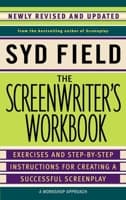
This a great book for any writer. I picked it off a bookstore shelf back in 1980 and it changed my life. Suddenly I knew about structure. It told me what I needed to know. It was the key that opened the door to understanding, not just movies, but books, stories, essays and now I write my speeches based on the same structural moments. I look at movies and follow the structure and I know a good from a bad speaker depending on how his speech is formed and written. This book is the best little friend a writer can have and I would recommend it to anyone who needs to find the right way to grab an audience. As a matter of fact, I have given it to many friends who talk about writing. The screenwriters workbook is the companion volume to this book and together, they teach a writer how to find the basic structure. Yes, there are more advanced books and more comprehensive books. And there are so many books on writing that you can buy, but when it comes to the basics and the most important elements of writing, this is it. Thank you Syd Field.
7
★★★★★
A most worthy contribution to the craft
By Thriftbooks.com User, January 28, 2000
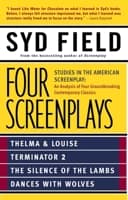
Reading reader reviews of books on writing for the screen is about like reading reviews of movies: There's a lot of disagreement between the eyes of beholders. I sometimes think I should ask the reviewers at Mr. Showbiz what I should get high on before going to see what they consider a masterpiece."Screenplay" was sent to me by a movie producer who asked me to write a screenplay for a book I wrote. When I lamented that I knew nothing about writing screenplays, he said the book he'd just read proved to him I could write; all I needed was to understand some important aspects of the screenplay vs. the book.I've learned a lot from Syd Field. "Screenplay" clearly showed me the visual aspects of film, "It's all about pictures," Field stresses over and over. If I learned nothing else from him, how to put a screenplay into professional format would make "Screenplay" worth the trip.Sure, I had to study the book, go back over it several times before I got this, or that. But gosh, diving into writing screenplays isn't like a lesson in Microsoft Windows -- click here, drag that over there.There's a lot to learn, and Syd Field offers a lot of guidance for the serious student. I don't care if he's never written a screenplay. Some of the very best book editors wrote nothing except editorial marks on others' works. The fabled Scribner's editor of old, Max Perkins, who brought some of their best out of Scott Fitzgerald, Hemingway, James Jones, Marjorie Kennan Rawlings, etc. etc., never wrote a book.I'll say this: If you want to read a book on screenplays and put it down with the feeling you're ready to roll, don't bother with anybody's book on the subject. But if you really want to learn, if you have the requisite creativity -- AND gritty energy -- you'll get your money's worth from Syd Field's "Screenplay."Also, his "Four Screenplays" has been very helpful to me. Field has a way of reinforcing things by saying them a different way, in a different setting. I really didn't get his advice to "get into a scene late and get out early" until I read this book. And didn't he pick some dandies? "Thelma and Louise" and "The Silence of the Lambs" are the two I studied most diligently, and what a ride it's been. Two great, great movies, to my mind, both demonstrating what Syd Field repeatedy shows us are important elements of fine screenplays.One other thing, Field's coaching has put a tiny new edge on my writing skills as regards books, too, a benefit he probably didn't expect a writer would obtain.
5
★★★★★
No wonder this book is considered the classic
By Thriftbooks.com User, January 22, 2000
No wonder the New York Times calls this book "the classic," and why it's referred to as the "Bible" of the film industry. I read this book many years ago, and I thought it was very good, then I put it away. When somebody asked to borrow it, I loaned it to them, and never got it back. When I started thinking about writing a screenplay, the first thing I did was look for this book. I didn't remember who I loaned it to, so I had to go out and buy another one. Am I glad I did. The way Field writes, the conceptual presentation of his ideas, is truly masterful. The films used are broken down in a clear and concise way. I had truly forgoten what a great book this is. I have a much greater appreciation of what makes a good screenplay now. You begin with structure, then begin to unfold the elements of plot and character within that form. And, form is everything. Once you know the structure you can write it anyway you want. This is a book I'll never loan out anymore. I will always keep it by my bedside for many years to come and refer to it often.