The Prodigious Builders: notes toward a natural history of architecture with special regard to those species that are traditionally neglected or downright ignorant
From dust jacket notes: "...Here, Rudofsky displays his genius for seeing and explaining the meaning of vernacular architecture - the dwelling, fortifications, tombs, monuments, and countless other adaptations that constitute the global legacy of untutored men both ordinary and extraordinary: the 'prodigious builders.' The author's discussions range from China's floating villages to the cultural significance of doors and windows in various parts of the world; from a Polish salt mine so vast as to be a self-contained community complete with churches, restaurants, and a narrow-gauge railway, to the African Dogon's 'Big House,' whose parts collectively symbolize a man procreating; from the ingenious pre-technological alternatives to air-conditioning, to giant observation kites. In each case Rudofsky brings to his subject a singular blend of erudition, wit, and insight that makes the exotic seem logical and the commonplace bizarre....Rudofsky's cogent arguments are amply documented with over 100 of his unparalleled photographs, in addition to many more rare engravings and other illustrations. The total effect is to expand far beyond dictionary definitions our concepts of both architecture and the human spirit." This description may be from another edition of this product.
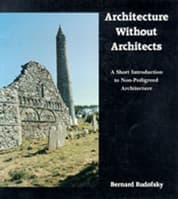
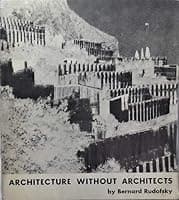
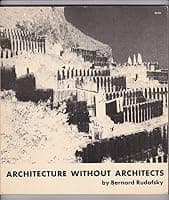
Along with Architecture without Architects, Bernard Rudofsky has provided us with a visually rich, though hardly elegant view of indigenous building ideas that show how crucial an understanding of the demands of place are in home and building design. I have treasured these books for decades, and find in them ways to move forward into the demands of global warming and the need for regional building styles to develop. And they're just plain fascinating.
0
★★★★☆
You must read this book
By Thriftbooks.com User, October 2, 2000
Frankly, I'm a bit shocked that there aren't any reviews for this book, and if it has anything to do with the scarce availability of Rudofsky's semi-seminal work, all the worse.This book needs to be read, not because the text is brilliant -- I don't think it is -- but Rudofsky writes about topics here that rarely are written about elsewhere. Traditional architecture, vernacular architecture, community architecture, and even non-human architecture. An invaluable resource.