From "the finest British poet of our time" (John Hollander), a blank-verse meditation on the mystery of grace-and the capstone to a decade-long poetic project.
"Hill is probably the best writer alive, in prose or rhyme, in the English language.... He manages-in a manner unrivalled since Yeats-to make phrases, to mythologize our predicament, to speak for us." --A. N. Wilson, Daily Telegraph
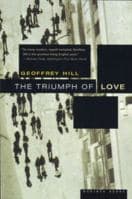
The fourth book of poems by Geoffrey Hill to appear since 1996, this is the final installment of the remarkable series that began with Canaan and continued with The Triumph of Love and Speech! Speech! Read together, these four books-each a distinct and complete aesthetic achievement-form a single great poem, a kind of high-modernist Divine Comedy that is at once a prophetic judgment on man's fallen state and a sad and angry consolation. The Orchards of Syon is Hill's Paradiso, a Dantean eclogue in which the natural world, and the dream-state of our earthly existence, offer glimpses into Paradise. Having cut us to the quick in his previous books, Hill now heals us with the balm of his own language, and in doing so remakes the devotional poem for our times. This description may be from another edition of this product.
Latest installment from the maestro of contemporary verse
By Thriftbooks.com User, March 25, 2003
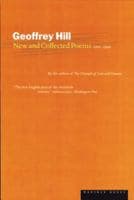
A meditation on immortality, memory, and poetry: all this should be familiar to readers of Geoffrey Hill's poetry. Orchards is the third book-long poem Hill has produced in the past five years, and, even more so than the first two, must be read in conjunction with his earlier work to be fully appreciated and understood. (First time readers of Hill would be better advised to turn to his "New and Collected Poems," or "The Triumph of Love" for a starting point).Once again (the other time was in "Speech! Speech!") Hill forgoes the sweeping lyricism of "The Triumph of Love" in favor of a focus on pitch rather than tone (think of Hopkins). At times, awkward, flailing about, reaching and overreaching, or falling short, "The Orchards of Syon" nevertheless achieves at moments a poignancy and precision that rewards close (very close) readings.Hill was born in 1932 in England, but now teaches at Boston University; his topics are 16th/17th c. English poetry, but also Hopkins and 20th century poetry, and he is "Professor of Religion and Literature". Unsurprisingly then, this poem delves into the question of Augustine vs Pelagius; Bradwardine vs Ockham, that is to say, divine will vs human "free" will.Beware, this is dense stuff, and will require time and effort to be unpacked, unravelled, understood. It is a poem to be read over years, not days or months. As Hill writes in section VIII: The curlew's pitch distracts us from her nest. But: end this for all in some shape other than vexed bafflement; each triangular wall-cope cladded with tight moss springy as a terrier's pelt, buttonhole emerald polypodae, sprung tremblers within the burring air of the fell?Amen to that, I say.