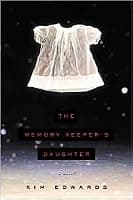
A #1 New York Times bestseller by Kim Edwards, The Memory Keeper's Daughter is a brilliantly crafted novel of parallel lives, familial secrets, and the redemptive power of love Kim Edwards's stunning novel begins on a winter night in 1964 in Lexington, Kentucky, when a blizzard forces Dr. David Henry to deliver his own twins. His son, born first, is perfectly healthy, but the doctor immediately recognizes that his daughter has Down syndrome. Rationalizing it as a need to protect Norah, his wife, he makes a split second decision that will alter all of their lives forever. He asks his nurse, Caroline, to take the baby away to an institution and never to reveal the secret. Instead, she disappears into another city to raise the child herself. So begins this beautifully told story that unfolds over a quarter of a century--in which these two families, ignorant of each other, are yet bound by the fateful decision made that winter night long ago. A family drama, The Memory Keeper's Daughter explores every mother's silent fear: What would happen if you lost your child and she grew up without you? It is also an astonishing tale of love and how the mysterious ties that hold a family together help us survive the heartache that occurs when long-buried secrets are finally uncovered.
Although she published an award-winning short-story collection called The Secrets of a Fire King in 1997, Kim Edwards didn t have any aspirations of becoming a novelist. That is, until a pastor told her a remarkable story that haunted her until she adapted it into The Memory Keeper s Daughter .
I haven't finished this yet but I love reading it and am savoring it, several pages at a time. I love the descriptive writing and the atmospheric senses of place. And it's an interesting plot. My only wish so far re this book is that there is more about Caroline since I think she is more interesting.
0
★★★★★
Inspired by a true story but a work of fiction.
By Tc, March 14, 2024
It is tragic but heartwarming. It shows how the holes in someone's life can increase selfishness. It also shows how great challenges can bring great joy.
0
★☆☆☆☆
I love the story, but not the publication date.
By Alaskan Gypsy, February 13, 2023
Verified Purchase
When I was a child, it was the 1970's. My parents had a book, based on true things, some of which were still in the newspapers and which, as far as I can tell, is this same exact story. I am in shock! As a writer, I am offended. I would never have bought this if I thought the publication date was the alleged first date of publication. I thought it was just rereleased, for some reason.
1
★★★★☆
So good, so sad!
By Suze, August 22, 2022
Verified Purchase
Very beautifully written. Loved it!
0
★★★★☆
A Wonderful Story of Regret and Redeption!
By Kristin, February 15, 2021
Verified Purchase
Secrets--we all have them, right? This is a tale of regret, redemption, sadness and joy. A compelling story that weaves through many themes: the secrets we harbor (a great deal from even from those we love the most) and our ability to rationalize all manner of lies. It drove home the point that we cannot decide the protection of others. When I picked up this book, I was on the fence--reviews were glowing or terrible. I will say that I did not empathize with either David or Norah--both of whom I found to be very selfish individuals---deciding to "give away" a child, affairs, etc. Lies come out of one mouth and entangle all those surrounding, eventually suffocating. Although, there was a "happy" ending, I will say that it was not the one that I anticipated and for that I am thankful.
0
★★★★★
The Memory Keeper's Daughter: great fiction and a great romance
By Thriftbooks.com User, March 30, 2007
Normally I wouldn't touch a mix of fiction and romance, but this one is different. Really awesome! My first daughter was born lifeless and gray-blue. "Like a seal," I remember thinking as the room went bright white and the doctor started suctioning her mouth. I pushed my wife's head back onto the pillow so she wouldn't be able to see the slick form down below. The oxygen tank hissed angrily. In the minutes that followed, as we waited and waited for my daughter to cry, all the hopes we'd stored up were suffocated under the weight of our new future that filled the room with fear. Mercifully, few parents experience the shattering birth moment we did, and it may be that memories of my daughter's birth magnified the emotional impact of Kim Edwards's debut novel. But I think anyone would be struck by the extraordinary power and sympathy of The Memory Keeper's Daughter. The book opens during a snowstorm in Lexington, Ky., in 1964, when Norah Henry realizes that she's going into labor. The weather keeps her doctor from making it to the office in time, but her husband, David, is an orthopedic surgeon with enough experience to handle the situation. Under the partial influence of gas, Norah gives birth to a healthy baby boy, but as David tells her the happy news, another series of contractions begins. He quickly sedates his wife again, and she gives birth to another child, a girl with Down syndrome. "Later," Edwards writes, "when he considered this night -- and he would think of it often, in the months and years to come: the turning point of his life, the moments around which everything else would always gather -- what he remembered was the silence in the room and the snow falling outside." In that quiet, terrifying moment, the grief and resentment caused by his sister's death at the age of 12 washes back over him, and he acts to preserve their vision of a happy future. He hands the baby to his nurse and asks her to take it to a home outside the city for handicapped children. When Norah awakens a few minutes later, he tells her their second baby was stillborn. "He had wanted to spare her," Edwards writes, "to protect her from loss and pain; he had not understood that loss would follow her regardless, as persistent and life-shaping as a stream of water. Nor had he anticipated his own grief, woven with the dark threads of his past." Some ominously saccharine moments indicate that Edwards can slip into the treacly trade -- "The love was within her all the time, and its only renewal came from giving it away" -- but these gaffes are relatively infrequent, especially considering the presence of a handicapped character, who would, in less disciplined hands, be used to generate a waterfall of sentimental tears. The episodic structure allows Edwards to survey these two families through the '60s, '70s and '80s, but frankly she's best when she moves slowly. The middle section skips through the years, obscuring the characters behind Significant Historical Moments: