ISBN: 1853261750
ISBN13: 9781853261756
The Idiot
$8.49List Price: $9.99
Save $1.50!ISBN: 1853261750
ISBN13: 9781853261756
Formats
Conditions
A readable copy with all pages intact.
Formats
Conditions
A readable copy with all pages intact.
Conditions
A readable copy with all pages intact.
Formats
Conditions
A readable copy with all pages intact.
This was a wonderful read. A little advanced and I did go to the front to remind myself which character was being referenced until I could remember them all. Funny how society as a general standard never changes no matter the place or the time.
Princy Myshkin is perceived by others around him as being an idiot, but I will leave it up to the reader to decide whether he really is one. Some characters perceive him to be the most trustworthy man they have ever meant, while others call him an intellectual and a democrat. Yet, most revert back to calling him an idiot. The book is full of the basest characters, and only Myshkin can offer them a shot at redemption. He sees them for their true selves, good or bad, and loves them for who they are. Myshkin has been called a Russian Christ and is one of the most provocative characters that I have come accross in literature. In addition to Dostoevsky's strong characterization, this book also includes the author's critique of capital punishment, the role of women in society, and the role of aristocracy. The book is both introspective and political, although not overly so. I found it to be a new favorite of mind, and I am sure it will stick with me for awhile. It is a very good novel.
The Idiot is often unfairly compared to Dostoyevsky's other masterpieces and, even though The Idiot usually comes out on the short end of any comparison, it is certainly my favorite. Although the narrative of The Idiot may ramble more than do some of Dostoyevsky's other books, I feel it is ultimately more profound.At its core, The Idiot is a character/society study although it also encompasses many religious and political aspects as well. The central character, Prince Myshkin, provides the contrast for all the other characters and is definitely a "Christ-like" figure, a man who embodies most perfectly the Christian ideals of selflessness and love.Prince Myshkin is a man who has suffered from mental illness since childhood. This illness has the curious effect of causing him to respond from his heart rather than from his head. In addition, Myshkin also suffers from a form of epilepsy that causes him to launch into tirades regarding the social ills of the day. As a Christ-like figure, Myshkin is in direct contrast to the other characters in the book who are all worldly and sophisticated, though somewhat cynical, aristocrats. Myshkin's extreme goodness also causes him to become entangled in various political and personal intrigues.Although completely good, Prince Myshkin in a fully realized character. One of the marvels of this novel is that Dostoyevsky managed to present Myshkin as a serious, rather than a comic, character. His goodness is not something we want to laugh at. There are many comic moments in the book, however, and most of them are provided through various financial and romantic entanglements.Although Prince Myshkin is the thread that links all the characters and aspects in the novel, he is not the only fully realized character; the others are also extremely well drawn. Dostoyevsky was fond of using real life incidents in his books and his notes tells us this is something he did in creating the characters that populate this book.Ultimately, The Idiot is a tragic book. Politically, it ridicules the shallow ideals of the Russian aristocracy, and, while Prince Myshkin's ramblings may seem comic, they are actually harsh criticism.Prince Myshkin was more than "a positively good man." He was a man who could see into the future and know what lay in store. Dostoyevsky's deep insight into the character of man makes The Idiot one of literature's most profound and timeless works.
Not my favorite of Dostoevsky's but that may be because it even more than others ends differently than I desired. Once again I was amazed by his use of seemingly psychotic characters that in fact strike me as being incredibly accurate depictions of common persons. This author and this book move me more than any other. Everyone should have a copy.
Published by Ashly Moore SheldonJanuary 15, 2021
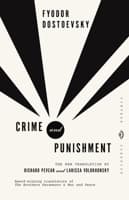
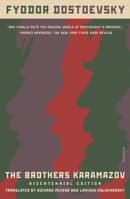
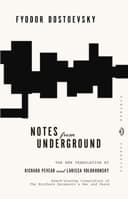
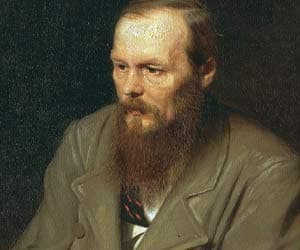
Fyodor Dostoyevsky's successful first book, Poor Folk, came out 175 years ago today when the author was only 24 years old. But in a life beset by drama worthy of, say, a Russian novel, it would be many years before he produced a notable follow-up. Here we explore the literary giant’s best books and how they mirror his extraordinary life.