Skip to content
ISBN: 0198742797
ISBN13: 9780198742791

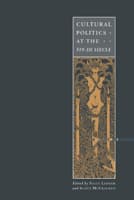
The Fin de Siecle: A Reader in Cultural History, c. 1880-1900

$7.49List Price: $75.00
Save $67.51!
ISBN: 0198742797
ISBN13: 9780198742791
Formats

Conditions

A read copy, but remains in excellent condition.

Formats

Conditions

A read copy, but remains in excellent condition.

See all 2 editionsfrom $7.49

Book Overview

The fin-de-si?cle period--roughly the years 1880 to 1900--was characterized by great cultural and political ambivalence, an anxiety for things lost, and a longing for the new. It also included an outpouring of intellectual responses to the conflicting times from such eminent writers as T. H. Huxley, Emma Goldman, William James, H. G. Wells, George Bernard Shaw, and Oscar Wilde. In this important anthology, Ledger and Luckhurst make available to students, scholars, and general readers a large body of non-literary texts which richly configure the variegated cultural history of the fin-de-si?cle years. That history is here shown to inaugurate many enduring critical and cultural concerns, with sections on Degeneration, Outcast London, The Metropolis, The New Woman, Literary Debates, The New Imperialism, Socialism, Anarchism, Scientific Naturalism, Psychology, Psychical Research, Sexology, Anthropology, and Racial Science. Each section begins with an Introduction and closes with Editorial Notes that carefully situate individual texts within a wider cultural landscape.
Format:
Paperback
Language:
English
ISBN:
0198742797
ISBN13:
9780198742791
Release Date:
December 2000
Publisher:
Oxford University Press, Incorporated
Length:
392 Pages
Weight:
1.25 lbs.
Dimensions:
0.8″ × 6.1″ × 9.2″
Criticism & TheoryEnglandEnglish LiteratureEssaysEssays & CorrespondenceEuropeHistoryHistory & CriticismLiterary CriticismLiterary Criticism & Collections

More by Sally Ledger

Customer Reviews

1 customer rating | 1 review
Write a Review

One of the best Fin de Siecle anthologies around

Fin de siecle is one of those fascinating topics in literary and cultural studies. However, it is, just like postmodernism, a very hard concept to precise. Ledger and Luckhurst help to solve this problem thanks to a complete selection of texts that represent 13 cultural phenomena of the time. Probably the text would require some accompanying texts if the reader is not familiar with the topic, but it offers to the more especialized reader a very complete reference to those texts that are fundamental to understand the time but do not appear on the literary canons. A must for anyone interested in the end of the nineteenth century.

0