


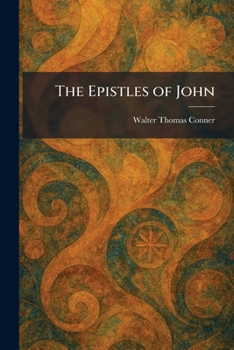
The Epistles of John

Select Format
Select Condition 
Book Overview
"The Epistles of John" by Walter Thomas Conner offers an insightful and systematic exploration of the three letters traditionally attributed to the Apostle John. This work of biblical exposition provides a thorough analysis of the theological and practical themes contained within 1 John, 2 John, and 3 John, making it a valuable resource for students of the New Testament.
Conner's commentary focuses on the essential message of the Johannine writings: the nature of God as light and love, the importance of truth in the face of false teaching, and the evidence of genuine Christian fellowship. The author carefully unpacks the text to reveal the profound spiritual truths regarding the assurance of salvation and the ethical requirements of a life lived in Christ. Written with clarity, the book bridges the gap between scholarly exegesis and practical application.
Ideal for teachers and lay readers alike, "The Epistles of John" emphasizes the historical significance and enduring relevance of these New Testament books. By examining the context of the early church and the challenges it faced, Conner sheds light on the wisdom of the Beloved Disciple, encouraging readers toward a deeper understanding of the faith and the spiritual legacy of the Johannine community.
This work has been selected by scholars as being culturally important, and is part of the knowledge base of civilization as we know it. This work was reproduced from the original artifact, and remains as true to the original work as possible. Therefore, you may see the original copyright references, library stamps (as most of these works have been housed in our most important libraries around the world), and other notations in the work.
This work is in the public domain in the United States of America, and possibly other nations. Within the United States, you may freely copy and distribute this work, as no entity (individual or corporate) has a copyright on the body of the work.
As a reproduction of a historical artifact, this work may contain missing or blurred pages, poor pictures, errant marks, etc. Scholars believe, and we concur, that this work is important enough to be preserved, reproduced, and made generally available to the public. We appreciate your support of the preservation process, and thank you for being an important part of keeping this knowledge alive and relevant.
Customer Reviews
ThriftBooks ® and the ThriftBooks ® logo are registered trademarks of Thrift Books Global, LLC
