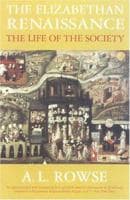
Thanks to Shakespeare, Hollywood, and the formidable Elizabeth I herself, Elizabethan England remains a place and time that fascinates us. Modern England still has visible memorials of the Elizabethans--the houses they built, the objects they cherished, the patterns they imposed upon the very landscape. A. L. Rowse's famously vivid portrayal of the Elizabethan world is a detailed account of that society and tradition, from the lowest social class to the men and women who governed the realm. A major new introduction from Christopher Haigh offes both a reflection on Rowse's masterpiece and an assessment of the Elizabethan Age. This description may be from another edition of this product.
If someone asked me to recommend a single book to read on Elizabethan England, this might well be the one I'd suggest. When I wanted to know about the workings of local government or the role of churchwardens or how the concerns of city and country people differed or how the religious settlement reverberated at different levels of society or any of a dozen other details of the workings of Elizabethan society, this was the source where I found the information I needed. I enjoy Rowse's writing style too--it is approachable and not stuffy in the least. He was a very opinionated historian (he loathed the Puritans, for example), but he was also quite open about his biases--and this openness, I find, just adds to the enjoyment of reading his work. (He was not, however, terribly sensitive to or sensible about women's issues--his "identification" elsewhere of the Dark Lady of Shakespeare's sonnets being a prime example--but that doesn't really enter in here, except for the fact that he, like most historians of his generation, doesn't much consider women's contributions to and roles in society.)