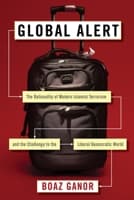
The expansion and escalation of global terrorism has left populations across the world and decision-makers responsible for contending with it unprepared This description may be from another edition of this product.
This book was in great shape just as described. Also the shipping was incredibly speedy!
0
★★★★★
The BEST book for a forgotten reader -- legislators
By Thriftbooks.com User, October 22, 2007
This is the most enlightening book I've read as a lawmaker. Dr. Ganor pens an easy-to-understand account, not only of the obvious problems with terrorism, but those involving America's future decisions on how to lead without sacrificing US civil liberties. EXCELLENT! REP. BURKE DAY Chairman Public Safety & Homeland Security Ga House of Representatives
0
★★★★★
Superlative
By Thriftbooks.com User, June 15, 2006
This is the most thorough, cogent, and intelligently written work on terrorism and the ways to defeat it to grace the open literature in recent times. Unlike the more common offerings in this field, Ganor's work goes to great lengths to avoid or at least identify potential bias and to present opposing views. Nor does the author shy away from tough issues. Deterrence is one such topic. While noting that deterrence can be a matter of image (p. 63), he also recognizes the difference between deterring nations or terrorist organizations vs. deterring individuals or networks (p.64). He analyzes measures intended to deter terrorists, concluding that, ultimately, the attacker becomes used to a given measure and learns to live with it or overcome it (p.74). Yet he also addresses the complexities inherent in making public the thresholds set for deterrents (p.94). Another example is his thoughtful note that public warnings should only be issued when accompanied by concrete guidelines to follow that are directly related to the warning (p. 260) -- a welcome contrast to the post-9/11 proliferation of nonspecific warnings that often give the appearance of emerging to offset future claims of failing to alert the public. For clarity, analysis, and insight, Ganor's book is without peer.
0
★★★★★
The Most-Comprehensive Book I've Seen
By Thriftbooks.com User, September 1, 2005
Dr. Ganor is an expert on counter-terrorism from the country with the most experience in that area -- Israel. He has spent his life sturying counter-terrorism. This book is based on his doctoral discertation 'Israel's Counter-Terrorism Strategy.' It has been expanded to cover the world rather than just Israel. Most of the book is presented in the form of dilemmas. For instance, is terrorism a crime such as murder where the individual who did it should be hunted down, tried, imprisoned, etc.? Or is it a form of warfare where the individual perpetrator is less important than the organization be it govermental or otherwise behind him? The answer to this question determines what investigative techniques can be used, what incarceration rules should be followed, how extradition agreements are applied (murderers can be extradited, political activists are not ). All of these examples are just in the first chapter. There are ten chapters, each of which cover one area of dilemmas. Chapter 8, for instance covers the media. The terrorists understand and play for media attention. On the other (and darker) side, coverage of terrorists increases viewership or numbers of newspapers sold. This book is the most complete, most thought-out comprehensive discussion on counter-terrorism that I have seen. Note my emphasis on counter-terrorism. This is a book on how to fight terrorism, it is not a book on terrorism per se. Highly recommended. I hope our leaders read this.
0
★★★★★
Brilliant ...
By Thriftbooks.com User, May 17, 2005
Saw Mr. Ganor on C-Span - May 2005. His absolute (total mastery) of the suject of the (radical) Muslim terrorist movement mindset, and his analysis how to end this (complex, difficult, and long-range problem) ... is nothing short of brilliant !