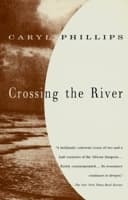
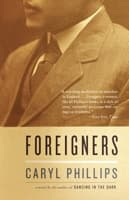
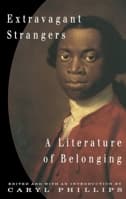
In this fascinating inquiry into the African Diaspora, Caryl Phillips embarks on a soul-wrenching journey to the three major ports of the transatlantic slave trade. Juxtaposing stories of the past with his own present-day experiences, Phillips combines his remarkable skills as a travel essayist with an astute understanding of history. From an West African businessman's interactions with white Methodists in nineteenth-century Liverpool to an eighteenth-century African minister's complicity in the selling of slaves to a fearless white judge's crusade for racial justice in 1940s Charleston, South Carolina, Phillips reveals the global the impact of being uprooted from one's home through resonant, powerful narratives.
This is a remarkably complex and thought-provoking book. It would be of interest to anyone who thinks about: slavery/the middle passage, the limits (or failures) of Pan-Africanism, the power of the 'Exodus' myth in the Bible, and finally the invisible histories of urban space (i.e., of cities like Liverpool, UK and Charleston, SC). The different destinations in the book -- Ghana, Liverpool, Charleston, even Israel -- all have some bearing to the middle passage. The argument of this book, if there is an argument, seems to be that the journeys "homeward" that many people of African descent invent for themselves are all in some way symptomatic of the original event of separation, the forcible departure constituted by captivity and the journey to the new world.Amardeep Singh
0
★★★★★
Unexpected tone, aim and even subject matter. It's excellent
By Thriftbooks.com User, July 25, 2001
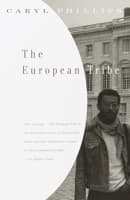
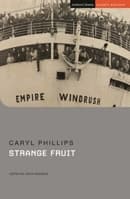
I picked this book up in the library probably because of its alluring cover image and title, I'll admit it. And I was prepared to even enjoy what I thought was coming: an intellectual travel book of the Paul Theroux ilk, with perhaps the added sarcasm and chip on the shoulder due any returing British colonial. It was, however, immediately more interesting and engrossing than any of those books Mr. Theroux has written, and it had even more honesty than Maya Angelou's book about coming to Africa, "All God's Children Need Traveling Shoes." For a long time I was not sure if it was meant to be novel or not. It was acertainly a novel idea, to make such trips, one after the other, in the time that one would need to see the places one was visiting (although I get the feeling that he might have strayed further afield in Africa than he did. There is an element of depression at times that was perhaps strongest in Africa, that kept some of his questions from being asked, so that he decided to move on and end any meandering reflection.) He was always interested in takling to people of the places he visited, but not to justify or romanticize about some book-learned image of the place. He aims more to appreciate what the possibilities of the places he visits are now, and then more importantly, what people there feel their history to be.It is almost as if he goes to visit a relative in each place, (although he never does this) and in the process was not recognised as a visitor or tourist (was not recognised as anything, perhaps, something that helped lend the novel air to the book, and an interesting element of his reflection. I guess it is based upon the narrator's (and author's, I suppose) African heritage, colonial experience, and English mother tongue, despite his never having lived in America, Britain, or Africa.) I recomend this book as history and even as a novel. I Guess it is a new sort of book for this age, frank and real and yet also curiously fictitious. It is hard to put down. I look forward to reading it again.