Brigadier Gerard is the hero of a series of comic short stories by British writer Arthur Conan Doyle. The hero, Etienne Gerard, is a Hussar in the French Army during the Napoleonic Wars. Gerard's most notable attribute is his vanity - he is utterly convinced that he is the bravest soldier, greatest swordsman, accomplished horseman and gallant lover in all France. Gerard is not entirely wrong since he displays notable bravery on many occasions, but his self-satisfaction undercuts this quite often. Obsessed with honour and glory, he is always ready with a stirring speech or a gallant remark to a lady.Conan Doyle, in making his hero a vain, and often rather uncomprehending Frenchman, was able to satirise both the stereotypical English view of the French, and - by presenting them from Gerard's baffled point of view - English manners and attitudes. This description may be from another edition of this product.
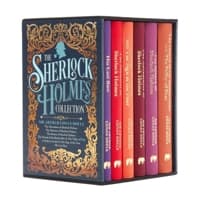
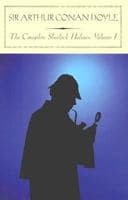
Sir Arthur Conan Doyle was both a doctor and a believer in spirits, which may partly explain why his Sherlock Holmes is one of literature's most beloved detectives: Holmes always approaches his cases with the gentility and logic of a scientist, but the stories are suffused with an aura of the supernatural. Narrated by devoted assistant Dr. John H. Watson, Holmes's adventures were so addictive that fans protested the master deducer's ""death"" in 1893 and Doyle had to resurrect him.
A Gallic Flashman, without the self-deprecating wit (quelle suprise!!)
By Thriftbooks.com User, April 20, 2006
What we have here is a collection of eight stories purportedly written about a Colonel of the Hussars in Napoleon Bonaparte's Grande Armee. His stories take us from the Spanish battlefields of the Penninsula campaign, through Russia (and the retreat), the Battle of Waterloo, and a fanciful failed rescue of L'Emporer from St.Helena. THese are stories of dashing doo and have all the Doyle hallmarks of Honor and Gentle-Manliness. One has to keep in mind that these stories were written eighty to one hundred years after the actual battles. Many of the people he wrote about, had been known to people of his parents age. So that Doyle had great insight into how these people thought and acted. The reading (I listed to the tape read by Bolen) of the stories prevents me from commenting on the character of Etienne Gerard. Some of the comments are very drole and may be Doyles way of making the Colonel less conceited that he comes off on tape. As it is, he has little of Flashy's insight into luck and cowardice and is totally consumed by his own abilities (very french indeed). The Flashman suceeds often in spite of himself (and is the first to admit it), Gerard always suceeds because he is the best swordsman, the best horseman, the greatest......(fill in the blank). The stories are worth reading for their marvelous description of the life of the cavalry in the early nineteenth century, and the romanticism of that time at the fin de siecle.