South Wind Changing
Conditions
A read copy that remains in clean condition.
Formats
Conditions
*Best Available: (ex-library)
A read copy that remains in clean condition.
Conditions
A read copy that remains in clean condition.
Formats
Conditions
*Best Available: (ex-library)
A read copy that remains in clean condition.
A Time magazine "Best Book" of 1994
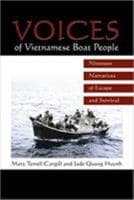
This is the compelling personal narrative of Jade Ngoc Quang Huynh, who was born in South Vietnam in 1958. He survived the war in Vietnam to become a university student in 1974. But because the Hanoi government policy was to persecute writers, intellectuals, and any suspected enemies of the state, Huynh was sent to a labor camp. South Wind Changing tells the riveting story of this early existence, his escape from Vietnam, his time in a Thai refugee camp, and the eventual new life he was able to carve out for himself in the United States. Here, where he first learned English while working at McDonalds, he was finally able to complete his education. In this well-written Asian-American memoir we encounter a remarkable life of struggle and survival, dreams and determination, imperialism and immigration, and other key twentieth-century experiences.An exceptional book, recommended for junior and senior high school students, advanced students, and adults. I also recommend Lac Su's I LOVE YOUS ARE FOR WHITE PEOPLE - a memoirI Love Yous Are for White People: A Memoir (P.S.)
The author was a college student when the communists invaded Saigon and sent him to a reeducation camp. He was neither a politician nor a military man. There he witnessed the cruelty of the wardens who starved, beat, and killed prisoners whenever they liked it. He was able to escape from the camp while accompanying an injured Viet Cong cadre to the hospital. He escaped to Thailand by boat and went on to graduate from Bennington College and Brown University after flipping burgers for some time. This memoir describes the events from the time he was a highschooler in Vietnam until his enrollment at Bennington College. The resilience and courage of the author could only equal his academic success and his lyric prose.
This is a powerful story of survival and eventually escape from the jungle re-education camps of post-war Viet Nam. See, perhaps for the first time, the untold side of this tragic piece of history. Huynh's prose is precise and poetic, at times transcending the brutal realism of the story in order to reach the spiritual core that held him together through his experience. This is an important book for anyone who is interested in this time period, and more importantly, where we, the US and Viet Nam, will go from here.