ISBN: B00RM7UY6E
Sayonara A Japanese-American Love Story
$15.89List Price: $0.00
ISBN: B00RM7UY6E
Formats
Conditions
A read copy that remains in clean condition.
Formats
Conditions
A read copy that remains in clean condition.
Conditions
A read copy that remains in clean condition.
Formats
Conditions
A read copy that remains in clean condition.
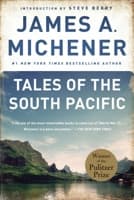
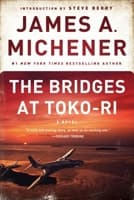
James A. (Albert) Michener , born around 1907, won the Pulitzer Prize for his first fiction, Tales of the South Pacific. The bestselling book was adapted into the popular musical and film, South Pacific. Michener's numerous bestselling novels also included The Source, Centennial, Texas, Hawaii, and Chesapeake. He also successfully wrote non-fiction, including travel stories and a memoir. Michener grew up in Bucks County, Pennsylvania and graduated summa cum laude from Swarthmore College. Following graduation, he traveled in Europe, and taught English at several private high schools. Michener returned to school at Colorado State Teachers College (now known as the University of Northern Colorado) to earn a master's degree. He taught there and at Harvard before working as an editor. Michener served in the U.S. Navy during World War II, traveling throughout the South Pacific Ocean on numerous missions. His experiences in the Pacific inspired Tales of the South Pacific. Though he tried a career in politics, Michener found greatest success in writing. During his lifetime, he sold an estimated seventy-five million books worldwide. His novel Hawaii was adapted into a film, and Centennial became a hit twelve-part mini-series. Michener also wrote screenplays, including Sayonara and The Bridges of Toko-Ri. Michener donated much of his earnings, sharing over $100 million with numerous beneficiaries. He died in 1997.
It is a very emotional & touching book. Shed a few tears. I love this book.
To me, Sayonara is an amazing story of a very unlikely couple. Maybe it is simply the woman in me that enjoys reading of a great love tale, but this novel truly hit me. In the beginning Lloyd is a man that would not think twice about dating a Japanese woman simply because of her race. But as time goes on, and the storyline progresses, his perspective begins to shift. He sees Hana-ogi not as a JAPANESE woman, but as a warm-hearted, loving human being. And although both of their careers forbid their relationship, neither one of them is willing to give up the bond they share. Their friends Joe Kelly and Katsumi are only another example of how love conquers, or rather, should conquer, all. Sayonara is not just a sappy love story. It is a tale of struggle and the overcoming of obstacles merely to be with the one you were meant to be with.
This is not my Japan - I was stationed there a generation later. Michener's prose describes Japan as it was during the Korean war. I still remember the vendors selling roasted chestnuts or skewers of yakitori beside the street. Today we have, God forbid, MacDonalds and Starbucks on the streets of Hiroshima. These are not my girls - most of the Japanese women I met, outside of the bar scene, were students in English classes. Their reasons for speaking with gaijin (foreigners) were varied. Some wanted to learn English for work. Some expected to travel. One had a sister who was married to an American. The girl who is now my wife of 25 years was a rebel who just did not want to conform to the strictures of Japanese society. I have to admit, I was first attracted because she was the cutest girl I had ever seen. She's still is, for me. Were there communication problems? Yes, at first. Now, probably no different from any other couple. Could Gruver's attraction to Hana Ogi have been purely physical? Maybe. Probably not. Sayonara isn't history - but the "tea ceremony" I saw in Kyoto last week wasn't real either.Enjoy this book - it's a window on a different time and a different place and a different people. It's a wonderful read if you can shift your perspecive and accept things as they were.
at how great this novel turned out to be and I really like being surprised in reading. I had a box of unread mass market paperbacks lying around for over a year. I was bored yesterday and picked up several to choose from. I started on the first couple of pages of "Sayonara" and I simply couldn't put it down. I thought the themes were very contemporary and the writing style seemed modern. I was surprised to see the publish date in the 1950s! I was drawn into a beautiful foreign world seen through the eyes of a staunch military man. His metamorphasis into a human being was beautiful. Stereotypes are common among nearly everyone, even if they are unfair. We can learn, like Gruver, to see past the image we are told to see. Even all American women are not carbon copies.
This is a beautiful tale of love and war. Though I am young, I have enjoyed the powerful way James Michener had written 'Sayonara'. I feel symphatetic towards the end for the dashing Major Llyod Gruver and his beautiful Hana-ogi. This has been a very enjoyable book and I recommend other people to read it.
I read this book in high school (in the 60's) and saw the movie several years after that (the endings are not the same), and must confess I'd forgotten just how racist and how chauvinistic even the sympathetic characters are. What's not in question is that things really WERE this way in 1953 when the book was published - what is in question is whether the average reader understood what Michener was trying to do in pointing it out. Given that racism (and chauvinism)are still problems in American society today, 45 years later, I'd say they didn't.