


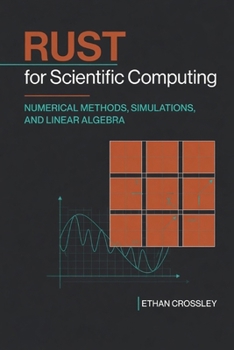
Rust for Scientific Computing: Numerical Methods, Simulations, and Linear Algebra

Discover how to leverage Rust for scientific computing and numerical methods. This book provides a practical introduction to building efficient, reliable simulations and numerical tools using one of the most performant and memory-safe programming languages available today.
What You'll Explore:
Core techniques for scientific computing in Rust, including linear algebra operations and solving differential equationsHigh-quality implementations for numerical simulations with a focus on correctness and performanceBest practices for structuring scientific code using Rust's powerful type system and ownership modelReal-world examples that bridge mathematical concepts with clean, maintainable Rust codeWritten for scientists, engineers, researchers, and developers who want to move beyond Python or C++ for computationally intensive work, this guide emphasizes clarity and reliability. Whether you're working on physical simulations, data analysis pipelines, or research software, you'll gain concrete skills for writing fast and trustworthy numerical code.
Ideal for readers with:
Basic Rust knowledge (or willingness to learn alongside scientific applications)Background in mathematics, physics, engineering, or related fieldsClear explanations, working code examples, and practical projects make this an accessible entry point into Rust for technical computing.
Customer Reviews
ThriftBooks ® and the ThriftBooks ® logo are registered trademarks of Thrift Books Global, LLC
