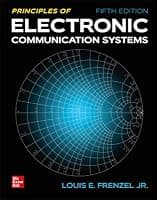
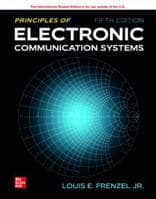
Principles of Electronic Communication Systems provides the most up-to-date survey available for students taking a first course in electronic communications. Requiring only basic algebra and trigonometry, this new edition is notable for its readability, learning features and numerous full-color photos and illustrations. A systems approach is used to cover state-of-the-art communications technologies, to best reflect current industry practice. This edition contains greatly expanded and updated material on the Internet, cell phones, and wireless technologies. Practical skills like testing and troubleshooting are integrated throughout. A brand-new Laboratory & Activities Manual provides both hands-on experiments and a variety of other activities, reflecting the variety of skills now needed by technicians. A new Online Learning Center is also available, with a wealth of learning resources for instructors and students.
McGraw-Hill's Connect, is also available as an optional, add on item. Connect is the only integrated learning system that empowers students by continuously adapting to deliver precisely what they need, when they need it, how they need it, so that class time is more effective. Connect allows the professor to assign homework, quizzes, and tests easily and automatically grades and records the scores of the student's work. Problems are randomized to prevent sharing of answers an may also have a multi-step solution which helps move the students' learning along if they experience difficulty.