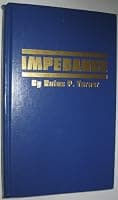
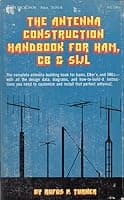
Many years back I bought a paperback copy of Turner's book "Impedance" (published 1976). It was becoming worn from use and then last year I discovered that there was a hard cover version(1976) published and was available from one of the after market sellers. Of course I bought it. That indicates what a good writer he is. I also have at least one other book he wrote. Now the only reason that I would rate this with only 4-stars is because of Stan Gibilisco. How he got his name on a Turner book is beyond me. A number of years ago I bought a book written by Gibilisco and it was one of the worst written books. Last year I purchased a book based on the title as something that I wanted to brush up on. When I got home I noticed that it was written by Gibilisco. I immediately returned the book. If a book has Gibilisco name on it, save your money.
0
★★★★★
Great intro to subject
By Thriftbooks.com User, December 6, 2007
This is a great intro to a subject that often baffles beginning electronics students. It covers all the main topics in a very readable way, gradually taking the student from the beginning concepts to the more advanced topics. The book also has some useful problem sets that test your ability to apply the concepts. Impedance can be a slippery concept, but it's really not that difficult once you get the idea. All active devices, as opposed to passive devices (such as resistors), have impedance rather than resistance, which just means that the resistance varies with the frequency of the current. In capacitors, the impedance is high at low frequencies but low at high frequencies, and in transformers, it's just the opposite. These opposed impedance characteristics allow us to construct one of the most useful of all electronic devices--the filter. Depending on how the components are arranged, one can therefore construct low-pass filters, high-pass filters, band-pass, and band-stop filters by combining low and high-pass types. It's really a fascinating area and one that opens up a much greater area of understanding in electronics once you get the idea. Even in neurobiology, nerve axons are spoken of as having an intrinsic impedance, and having a distributed capacitance and impedance much like an insulated electrical cable. The concept is useful for understanding many devices, including stereo amplifiers, radios and radio antennas, solid state devices, the many and various types of filters, and even the human brain. To get a firm grasp of this area this book was an invaluable aid during my early electronics and neurobiology studies, and I can recommend it to anyone wanting a great learning aid in the subject.