Step by step, Dwight McAran built a wall of vicious hate around himself. It was easy. He was a man who could slap one woman to death because she loved him, and hum a love song to another while he raped her. Sure, he did some time in jail. He sat in a cell and simmered for five long years until his hate hardened to a core of white-hot evil. Revenge was all he craved - and a plan was what he had - a plan just cruel enough to please him, and just crazy enough to work. This description may be from another edition of this product.
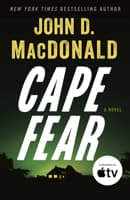
John Dann MacDonald, better known as John D. MacDonald , launched his writing career with a stroke of good luck. His wife submitted to a magazine one of his short stories, and the magazine published it. During the next forty years, McDonald wrote hundreds more stories as well as his series of detective novels. MacDonald was born in 1916 in Pennsylvania. He enrolled in the Wharton School of Finance at the University of Pennsylvania, but left without completing his degree. He later finished his undergraduate degree at Syracuse University and received an M.B.A. from Harvard University. MacDonald served in the OSS in Asia during World War II. MacDonald's novel The Executioners was adapted into the film Cape Fear. MacDonald was named a grandmaster of the Mystery Writers of America and won the only National Book Award awarded in the mystery category. He died in 1986.
One Monday We Killed Them All (1961) is one of John D. MacDonald's stand-alone thrillers. A Fawcett Gold Medal original, the first edition (pictured) has a fantastic cover. I'm not sure who the artist is (doesn't look like a McGinnis), but the layout is a masterpiece - skillfully evoking tension. I'm also a sucker for big goofy lettering, which this has in spades. The book itself is equally tense (and not, happily, goofy). The story begins with Lieutenant Fenn Hillyer - a model policeman - picking up his brother-in-law from prison. Dwight McAran has spent five years in jail for manslaughter. On one hand, he's lucky - he beat his girlfriend to death in front of a dozen witnesses. On the other, he's not - the woman was related to the most powerful man in town, and McAran has had five long, long years getting tortured in prison. Although his beloved wife is everything good and pure in the world, she has a blind spot for her brother Dwight. So while Fenn would rather McAran just ride off into the sunset, he's stuck welcoming McAran back with open arms. One Monday We Killed Them All (a great, if completely irrelevant, title) is very similar thematically and tonally to one of John D. MacDonald's more famous thrillers - The Executioners (Cape Fear). There's no question that McAran is a horrible, terrible man - within the first dozen pages he's actually kicked a puppy to make that point clear. The focus of the story is how everyone else reacts to him. When does the law of society fail and the law of the jungle take over? Fenn Hillyer is an exceptional police officer, but quickly discovers that is more of a hindrance than an asset when it comes to handling a monster like McAran. MacDonald, to his credit, adds more sides to the story. This is not a conventional tale of Fenn discovering his inner caveman to defend his family. McAran is, indeed, monstrous, but MacDonald gives us insight into his background. Showing how the 'law of society' fails to protect Fenn is easy - but showing how the 'law of society' has failed McAran as well - that's hard, and that's where MacDonald rises to the occasion. One Monday We Killed Them All is also notable for the unconventional resolution. Although good triumphs and evil loses, the ultimate climax occurs when Fenn is reconciled with his own internal struggles. As a pure, manly thriller, there's a lot of clinging and tears (and not just from the ladies), but as an investigation into man's struggle with his place in the world (as exemplified by both Fenn and McAran), this is impressive work. It is worth noting that the women are, unimpressively, objects. Fenn's wife (McAran's sister), Meg, is an impossible picture of sickening sweetness and naivete. This, unfortunately, isn't due to Fenn being an unreliable narrator (he's quite sweetly in love with his wife) - we have Meg's perfection (and moronic idiocy) pointed out by virtually every character in the book. She is the forgiving Madonna. The other women fare no bett