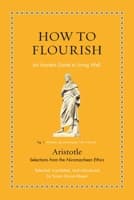
The Nicomachean Ethics by Aristotle
An accessible, condensed adaptation of Aristotle's exploration of how to live well
What is the good life?
For over two thousand years, readers have turned to Aristotle's Nicomachean Ethics for the answer. Written in the fourth century BCE at the Lyceum in Athens, this timeless work remains the most influential book on ethics and human flourishing ever written.
This is not a book of commandments. It is a book of observations.
Aristotle approaches the question of how to live with the same systematic rigor he applied to biology and physics. He examines virtue, friendship, pleasure, courage, justice, and wisdom-not as abstract ideals, but as qualities we can cultivate through habit and practice. His central insight is revolutionary: happiness is not a feeling, but an activity. It is the lifelong exercise of our highest capacities in accordance with reason.
What makes this edition different?
Clear, Modern Language. This edition is a condensed and lightly modernized adaptation of W. D. Ross's 1925 English translation. It presents Aristotle's arguments in approachable prose while acknowledging the historical translation on which it is based.
All Ten Books in Condensed Form. The edition preserves the ten-book structure while abridging the text. It follows Aristotle's inquiry from the function argument and the doctrine of the mean through justice, practical wisdom, friendship, pleasure, and the contemplative life.
Made for Modern Readers. Includes a glossary of key Greek terms (eudaimonia, phronesis, arete), a thoughtful foreword, and chapter divisions that make the text easy to navigate. Whether you're reading for a class, for personal growth, or out of pure curiosity, this edition meets you where you are.
What you'll discover inside:
- The Golden Mean: Why virtue lies between extremes, and how to find the right balance in courage, generosity, ambition, and anger
- The Function of Man: Aristotle's elegant argument for what makes a human life truly excellent
- True Friendship: The three types of friendship, and why only one kind is built to last
- Justice and Fairness: What it means to give people what they deserve, and why equity sometimes requires breaking the rules
- Practical Wisdom: The intellectual virtue that bridges knowledge and action, and why you can't be good without it
- The Contemplative Life: Aristotle's surprising conclusion about the highest form of human happiness
Who should read this book?
- Students encountering Aristotle for the first time
- Readers seeking practical wisdom about how to live
- Anyone interested in philosophy, ethics, or the history of ideas
- Professionals in leadership, education, or counseling
- Lifelong learners who want to understand the foundations of Western thought
Why Aristotle still matters
The questions Aristotle asks are the questions we still ask: How do I become a good person? What does it mean to live well? How should I treat my friends? What is justice? Can I be happy and moral at the same time?
His answers are not always easy. But they are honest, rigorous, and grounded in the realities of human nature. He does not offer quick fixes or empty slogans. He offers a map-one that has guided seekers, scholars, and statesmen for over two millennia.
This is the namesake text of The Lyceum Press, and it remains the essential handbook for anyone who wishes not just to live, but to live well.