"C. S. Lewis is the ideal persuader for the half-convinced, for the good man who would like to be a Christian but finds his intellect getting in the way."--Anthony Burgess, New York Times Book Review
A beautiful keepsake edition of the revered spiritual classic from one of the greatest writers and thinkers of the twentieth century whose insights continue to influence us today.
Our moral consciousness and moral judgements are proof to the human race that a moral being exists--God.
Mere Christianity makes available to both believers and nonbelievers C. S. Lewis's powerful and rational argument for the Christian faith. Recognized as one of the most important Christian books of the twentieth century, Mere Christianity brings together Lewis' legendary broadcast talks during World War II, in which he explored the core beliefs of Christianity--timeless topics that continue to engage us--right and wrong, human nature, morality, marriage, sin, forgiveness, faith, hope, generosity, and kindness.
Now in a deluxe edition featuring gilded pages, C. S. Lewis's brilliant and enduring work remains fresh and vital for readers today.
Lewis makes the process of Christianity so simple and logical. Must read for Christians and non-Christians alike
23
★★★★★
My father in law loves the book
By JessieLee, July 9, 2019
Verified Purchase
Great book if you are down on your faith
22
★★★★★
Mere Christianity.
By Thriftbooks.com User, September 25, 2017
Verified Purchase
This is a fantastic book. I really enjoyed this book. It is actually one of my favorites.
18
★★★★★
Solid, consistent and enjoyable
By Thriftbooks.com User, January 15, 2007
Originally a series of radio broadcasts that were transcribed into book form with the author's help, C. S. Lewis' witty and systematically logical defense of Christianity still endures as a favorite today. Although intellectual works of this caliber can seem intimidating, his conversational style of communication makes the book approachable and thoroughly enjoyable. He not only addresses the common sense of Christianity, but also thoughtfully doesn't neglect the practical need, the heartfelt void, that Christ alone can fill. All in all, this book is an all-around, solid work that consistently covers all the bases of thought and makes for a great read.
30
★★★★★
Excellent Intro to Foundational Beliefs
By Thriftbooks.com User, February 24, 2006
Mere Christianity is just that - the basics. C. S. Lewis was a man who refused to argue about the details. He placed a great importance on the central beliefs. This book is a collection of various works, and covers the basic elements of the Christian faith. I would highly recommend Mere Christianity for anyone; but especially for young people in their twenties. Some of the most seemingly difficult points of scripture are explained here in plain english. This is the place to start.
23
★★★★★
Merely wonderful...
By Thriftbooks.com User, September 20, 2005
C.S. Lewis was a rare individual. One of the few non-clerics to be recognised as a theologian by the Anglican church, he put forth the case for Christianity in general in ways that many Christians beyond the Anglican world can accept, and a clear description for non-Christians of what Christian faith and practice should be. Indeed, Lewis says in his introduction that this text (or indeed, hardly any other he produced) will help in deciding between Christian denominations. While he describes himself as a 'very ordinary layman' in the Church of England, he looks to the broader picture of Christianity, particularly for those who have little or no background. The discussion of division points rarely wins a convert, Lewis observed, and so he leaves the issues of ecclesiology and high theology differences to 'experts'. Lewis is of course selling himself short in this regard, but it helps to reinforce his point. The book looks at beliefs, both from a 'natural' standpoint as well as a scripture/tradition/reason standpoint. Lewis looks both at belief and unbelief - for example, he states that Christians do not have to see other religions of the world as thoroughly wrong; on the other hand, to be an atheist requires (in Lewis' estimation) that one view religions, all religions, as founded on a mistake. Lewis probably surprised his listeners by starting a statement, 'When I was an atheist...' Lewis is a late-comer to Christianity (most Anglicans in England were cradle-Anglicans). Thus Lewis can speak with the authority of one having deliberately chosen and found Christianity, rather than one who by accident of birth never knew any other (although the case can be made that Lewis was certainly raised in a culture dominated by Christendom). Lewis also looks at practice - here we are not talking about liturgical niceties or even general church-y practices, but rather the broad strokes of Christian practice - issues of morality, forgiveness, charity, hope and faith. Faith actually has two chapters - one in the more common use of system of belief, but the other in a more subtle, spiritual way. Lewis states in the second chapter that should readers get lost, they should just skip the chapter - while many parts of Christianity will be accessible and intelligible to non-Christians, some things cannot be understood from the outside. This is the 'leave it to God' sense of faith, that is in many ways more of a gift or grace from God than a skill to be developed. Finally, Lewis looks at personality, not just in the sense of our individual personality, but our status as persons and of God's own personality. Lewis' conclusion that there is no true personality apart from God's is somewhat disquieting; Lewis contrasts Christianity with itself in saying that it is both easy and hard at the same time. Lewis looks for the 'new man' to be a creature in complete submission and abandonment to God. This is a turn both easy and difficult. 'Mere Christianity' was originally a
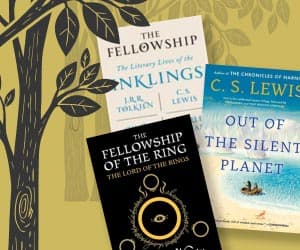
After meeting a century ago,C. S. LewisandJ. R. R. Tolkienbonded over their shared love for mythology, poetry, languages, and storytelling. The twoestablisheda literary discussion group and were instrumental in encouraging each other's groundbreaking works of fantasy. Learn about theirstoriedfriendship and ten moresuch literaryliaisons.
Ireland is no stranger to being home to literary legends, which may partly explain why it's referred to as "The Land of Saints and Scholars." With St. Patrick's Day quickly approaching, what better time to honor these literary legends and highlight some of the best Irish authors?