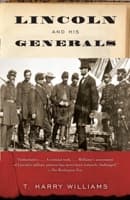
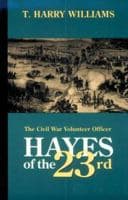
Here are the characters and personalities of the three great Union generals, explored with intelligence and wit by one of our most distinguished historians of the Civil War. Mr. Williams is interested not only in military skills but in the temperament for command and, most of all, in moral courage. Each of these men, he writes, "represents a particular and significant aspect of leadership, and together they show a progression toward the final type of leadership that had to be developed before the war could be won. Most important, each one illustrates dramatically the relation between character and generalship." From McClellan's eighteenth-century view of war as something like a game conducted by experts on a strategic chessboard; to Sherman's understanding of the violent implications of making war against civilians; to the completeness of character displayed by Grant, Mr. Williams's absorbing investigation offers a fresh perspective on a subject of enduring interest.
Lil Mac, Uncle Billy and Unconditional Surrender Grant
By Thriftbooks.com User, December 12, 2008
Long-time L.S.U. professor T. Harry Williams here evaluates the generalship of the three main Union generals of the American Civil War: McClellan, Sherman and Grant. None of the conclusions drawn about these three will be completely new to anyone well read on the Civil War. However, it is a treat to have these evaluations presented from so capable and engaging a pen as Williams'. In the continuum of generalship from McClellan to Grant, Williams first gives us McClellan, who although beloved by his troops and a striking figure on horseback, lacked the capacity for self-examination and grasp of reality necessary to properly do his job. Then Sherman, who showed early on the same delusional tendencies as Mac, but matured into a formidable and well-grounded strategist under Grant's tutelage. Last we have Grant, who from the beginning possessed self-awareness and common sense in great abundance, and was, Williams believes, the indispensable man to finally defeat Lee, regardless of numerical or material superiority.
1
★★★★★
wisconsin connection
By Thriftbooks.com User, November 2, 2008
I love to read about the Civil War, especially when the author was Wisconsin-educated. I have my own kind of connection to him since I became good friends with his first wife many years after she helped him produce his earliest published writings about the War.
0
★★★★☆
Great insight on three significant generals
By Thriftbooks.com User, February 22, 2004
This short book is really three separate essays about three of the North's most controversial generals. They seem to be arranged in the author's estimation of them, with McClellan being the poorest general and Grant the best. The essays are insightful, and Williams argues some interesting points that differ from what most historians believe, especially in the case of Sherman and McClellan. Throughout it all, he seems to remain, for the most part, fair, neither condemning nor fully praising any of the three. I don't personally agree with his argument that the primary objective in war should be destroying the enemy's army, and thus would rank Sherman higher than Grant, but I do think he makes an interesting point. If this book was documented (that is, if Williams showed where he got his information), it would be a lot better, and a lot more scholarly, but as it stands it is nevertheless an interesting argument on three of the North's most important generals.