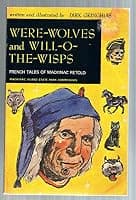
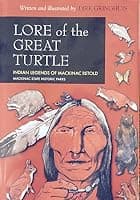
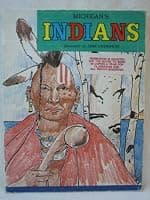
In 1959 Mackinac State Historic Parks began archaeological excavations on the site of Fort Michilimackinac in Mackinaw City, Michigan. Since then, the Parks have continued excavations, not only at Michilimackinac, Mackinac Island, and Mill Creek, but at other sites at the Straits as well. Over the years the highly respected Archaeological Completion Reports Series has presented significant interpretations of this archaeological research. The reports are now available through Michigan State University Press. Using the works of Henry R. Schoolcraft, Gringhuis retells Indian stories revering many features on Mackinac Island including Arch Rock, Devil's Kitchen, and Scull Cave.
Kindly retelling of Anishinabe legends for young readers
By Thriftbooks.com User, June 8, 2004
In this book, originally published in 1970, children's author/illustrator Dirk Gringhuis reconstitutes Chippewa myths from the Mackinac Island and Sault Ste. Marie regions, many originally collected by folklorist Henry Rowe Schoolcraft, into a volume of nineteen stories suitable for older children and young teenage readers. The myths are told in a way that is suitable for families of almost all beliefs. The overall tone of these retellings is gentle, and it lacks some of the grimness that marked these stories as they were originally told. One key theme of these retellings, repeated over and over, is that of the metamorphosis or transformation of the souls of key human characters into a new dimension or state of being.
0
★★★★★
A very nice book, and a wonderful resource
By Thriftbooks.com User, April 12, 2004
In 1820, Henry Rowe Schoolcraft (1793-1864) was appointed Indian agent with headquarters at Sault Ste. Marie; later he moved his headquarters to Mackinac, Michigan. Mr. Schoolcraft was fascinated with the Native-Americans, and began to study them and their culture, collecting many Native-American legends from the Mackinac area. In this wonderful book, author and illustrator Dirk Gringhuis (1918-74) retells nineteen of these legends, bringing them to life with his wonderful drawings.This is a very nice book, and a wonderful resource. The tales are all very lively, and are quite interesting to read. I enjoyed reading these legends to my children, and they enjoyed hearing them. We highly recommend this book to you!
0
★★★★★
Inspires the imagination with myths and legends.
By Thriftbooks.com User, October 29, 1999
This was one of my very favorite books as a child, and I'm glad to see that it's still available. Gringhuis collects Ojibwa legends from Mackinac Island and the upper Great Lakes generally for a children's book that helps children to see the world in a new way. It's not boring at all, especially because several of the stories involve transformations of characters into rock formations that one can still see on the island. Especially if you're going to Mackinac Island, it's a great book to read. The legend of Sugarloaf is alone reason to buy this book. In some ways, it's old-fashioned athropology, and some might see it as a relic of appropriationist philosophy, that is, stealing stories from people who held them as sacred. But Gringhuis, as in his other Mackinac books, is sensitive and compelling. He really creates a love of history with this book.