


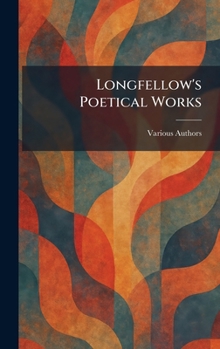
Longfellow's Poetical Works

"Longfellow's Poetical Works" is a profound assembly of the poetic legacy left by Henry Wadsworth Longfellow, one of the most celebrated figures in American literature. This anthology brings together the wide-reaching and influential verses that established Longfellow as a master of narrative and lyrical form. Within this collection, readers can explore the foundational epics of the American canon, including "The Song of Hiawatha," "Evangeline," and "The Courtship of Miles Standish."
Beyond his famous long-form narratives, this work includes a vast array of shorter poems and sonnets that delve into themes of nature, mythology, and the complexities of the human heart. Longfellow's unique ability to weave historical lore with accessible, rhythmic language allowed his work to transcend the academic sphere and become a central part of popular culture. This collection highlights his role as a cultural bridge, translating European traditions for an American audience while crafting a new national identity through verse.
Emphasizing moral clarity and emotional resonance, "Longfellow's Poetical Works" remains a vital study for anyone interested in the development of 19th-century literature and the enduring power of the written word.
This work has been selected by scholars as being culturally important, and is part of the knowledge base of civilization as we know it. This work was reproduced from the original artifact, and remains as true to the original work as possible. Therefore, you may see the original copyright references, library stamps (as most of these works have been housed in our most important libraries around the world), and other notations in the work.
This work is in the public domain in the United States of America, and possibly other nations. Within the United States, you may freely copy and distribute this work, as no entity (individual or corporate) has a copyright on the body of the work.
As a reproduction of a historical artifact, this work may contain missing or blurred pages, poor pictures, errant marks, etc. Scholars believe, and we concur, that this work is important enough to be preserved, reproduced, and made generally available to the public. We appreciate your support of the preservation process, and thank you for being an important part of keeping this knowledge alive and relevant.
Customer Reviews
ThriftBooks ® and the ThriftBooks ® logo are registered trademarks of Thrift Books Global, LLC
