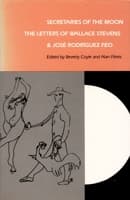
Long unavailable, now in paperback for the first time, these are the brilliant, subtle, illuminating letters of one of the great poets of the twentieth century. Stevens's famous criterion for poetry--"It should give pleasure"--informed his epistolary aesthetic as well; these letters stimulate one's appetite for poetry as they valorize the imagination and the senses. They also offer fascinating glimpses of Stevens as family man, insurance executive, connoisseur, and friend. FROM THE BOOK :"Next to the passion flower I love fuchsias, and no kidding. . . . Down among the Pennsylvania Germans there was a race of young men . . . who carved willow fans. These men would take a bit of willow stick about a foot long, peel it and with nothing more than a jackknife carve it into something that looked like a souvenir of Queen Anne's lingerie. The trouble that someone took to invent fuchsias makes me think of these willow fans. However it is a dark and dreary day today and who am I to be frivolous under such circumstances."--from a letter to Wilson Taylor, August 20, 1947 This description may be from another edition of this product.
For anyone interested in poetry, LETTERS OF WALLACE STEVENS should be essential reading. Along with Rilke's letters, it is the most fascinating book of correspondence by a twentieth-century writer: profound, witty, meticulous, at times funny, at times lyrical, and even in the duller letters written in a prose that is deliciously crisp and clear. It contains many explications of Stevens' own poems, important not only for understanding the poems but also as a way into the sometimes extremely strange imagination of one of our greatest poets. These are also the letters of a man of integrity (a rare quality among poets, among human beings), and integrity always rejoices the heart. As a brief example, here are two statements Stevens made about his attitude toward poetry: "I write poetry because it is part of my piety: because, for me, it is the good of life, and I don't intend to lift a finger to advance my interest, because I don't want to think of poetry that way." "My state of mind about poetry makes me very susceptible and that is a danger in the sense that it would be so easy for me to pick up on something unconsciously. In order not to run that danger I don't read other people's poetry at all." I have read this book at least ten times, and I now keep it at my bedside.
0
★★★★☆
These are not the letters of Keats
By Thriftbooks.com User, January 23, 2005
If there is one poet who I think Stevens is most comparable to it is Keats. It has to do with their great musical quality, the richness of vocabulary and language, polyphonic beauty in their long lines. Keats' letters are among the greatest in the language and help define not only his own poetic practice, but make a real contribution to literary theory in general. Stevens' letters do illuminate various aspects of his art but they seem to me to be on a wholly different level entirely from the poetry. The banker- businessman- husband is a much more pedestrian soul than the poet. The Letters are of great value to any student or scholar of Stevens, but they are not on the literary level of his great poetry. He was however or so I have the impression of from these letters a devoted father to his daughter. This at least gives a sense that the value of his life was not only in the great poetry he created.
0
★★★★★
fascinating letters and a indispensible reference
By Thriftbooks.com User, November 10, 1998
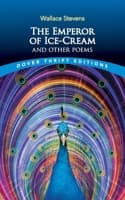
Not only are these letters to Harriet Monroe, William Carlos Williams, Allen Tate, Donald Hall, Robert Frost (and many others) fascinating and entertaining, but the comprehensive index makes it possible to find Stevens' own comments about and explanations of individual poems--for instance, his favorite poem was "The Emperor of Ice Cream"--and details about the circumstances in which they were composed. Not only does Stevens outline his evolving theory of poetry, he also expresses his opinions about contemporary art, music and more. Readers that enjoy literary correspondence should also see One Art (the letters of Elizabeth Bishop).