Skip to content
ISBN: 031230952X
ISBN13: 9780312309527

The New York Times Crosswords for the Work Week: 75 Crosswords for Your Coffee Break or Lunch Hour

$6.49List Price: $16.99
Save $10.50!
ISBN: 031230952X
ISBN13: 9780312309527
Formats

Conditions

A read copy that remains in clean condition.

Formats

Conditions

A read copy that remains in clean condition.
See all 180 editionsfrom $6.49

Book Overview

Don't let the week be all work and no play

What's a 10-letter word for "fun and relaxing" beginning with C? CROSSWORDS, of course Don't let life at the office or on the road get you down. Whenever you're feeling overwhelmed or stressed out, just pull out a New York Times crossword puzzle, and settle in for some refreshing solving with this brand-new collection of fun, easy puzzles, from the Monday and Tuesday editions of the New York Times. So relax, sit back, turn off the phone, and solve away. You'll find that you yourself (and dare we say it, your work as well) will be all the better for it

Format:
Paperback
Language:
English
ISBN:
031230952X
ISBN13:
9780312309527
Release Date:
January 2003
Publisher:
St. Martin's Press
Length:
96 Pages
Weight:
0.30 lbs.
Dimensions:
0.3″ × 6.0″ × 8.8″
HistoryLiteraryLiterary Criticism & CollectionsLiteratureLiterature & FictionPhilosophyReligionReligion & Spirituality

More by Blaise Pascal

Customer Reviews

1 customer rating | 1 review
Write a Review

Excellent Read; Humorous and Insightful

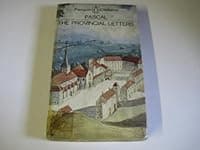
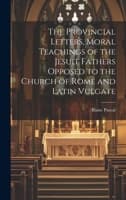
This series of letters by Blaise Pascal has it all; humor, a good guy (Pascal) and bad guys (Jesuits), and a moral.Pascal wrote these letters in defense of his Jansenist friends who were being branded as heretics by the Jesuits. At the time, the Jesuits were a powerful religious order who basically taught Christianity all over the world. In the Provincial Letters, Pascal exposes and ridicules the doctrines of the Jesuits, especially the "doctrine of probable opinions". The Jesuits (supposedly) were attempting to update the Christian doctrine to satisfy the lax morals of the modern world. In an attempt to "widen the pipe" to heaven, the Jesuits developed "modern" church doctrine (while ignoring traditional church doctrine, and the scriptures) to compensate for societies lax morals. Pascal, defender of the faith, effectively ridicules their doctrines and shows their errors.A word of caution, the letters are difficult going with respect to discussions on the finer theological points of view (how far we have fallen regarding knowledge of our faith). A good introduction will orient the reader to the conflicts and provide information regarding many of the theological discussions (the edition I used did not have an introduction; this one may). However, Pascal's writing is so humorous and engaging that I continued reading even when I was lost in the argument.I am on record (in another review) as stating that religion should be updated to reflect our modern view of the world. However, these letters point out the danger of attempting to do that. I need to reconsider that approach.

0