


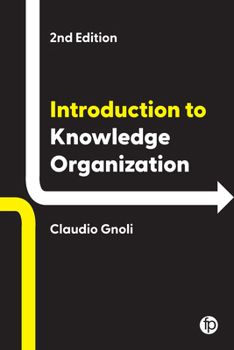
Introduction to Knowledge Organization, Second Edition

Fully revised and updated throughout, the new edition of this book provides a complete introduction to the rapidly expanding field of Knowledge Organization (KO), presenting historical precedents and theoretical foundations in a discursive, intelligible form, covering the philosophical, linguistic, and technical aspects.
In the contemporary context of global information exchange through linked data, knowledge organization systems (KOS) need to be represented in standard inter-operable formats. Different formats for KOS representation including MARC, Dublin Core, SKOS, and OWL are introduced as well as the application of knowledge organization to a variety of activities and contexts: education, encyclopedic knowledge, the Internet, libraries, archives, museums, galleries, and other institutions collecting and providing access to recorded knowledge. Key coverage includes
ontology and epistemology in KO;KO structures: lists, hierarchies, facets;KO types: tagging, taxonomies, thesauri, classifications, ontologies;conceptual analysis of documents; andapplications in the digital age.Covering theoretical and practical aspects of KO and using real-life examples to illustrate its application, this comprehensive book is a valuable resource for students, researchers and practitioners of knowledge organization, information organization, cataloging, and classification.
Customer Reviews
ThriftBooks ® and the ThriftBooks ® logo are registered trademarks of Thrift Books Global, LLC
