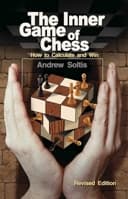
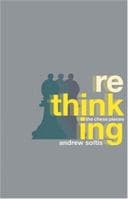
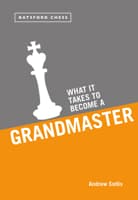
There are more than 30 moves to choose from in a typical chess position. Yet masters regularly manage to select the best one--and they do it faster, more confidently, and with less calculation than other players. The reason: masters know shortcuts that enable them to think more efficiently. International Grandmaster Andrew Soltis explains these techniques, including how to use specific cues to find good moves, how to streamline the analysis of a move's consequences, and how to use both objective and highly subjective criteria to find the right move--from any position. An enlightening window into a Grandmaster's thinking process.
This book will help anyone who is "stuck" in class B. It really helped me see where my thought process was going wrong when choosing a plan. My chief complaint is that the discussion of a position can go a page or two past the diagram and it is clumsy to flip back and forth for those of us without photographic memories.
2
★★★★☆
Well written book on the "thought process" in choosing your best continuation
By Thriftbooks.com User, September 18, 2006
This is a lot move than just how to choose "A" move, but would be better titled, How to choose the best "continuation". How to calculate and what goes into a logical plan with the thought process is a good discription of what Andrew Soltis's book is all about. Certainly this book is no substitute for having to study books on tactical situations, opening traps and positional play, but a nice supliment which will actually help you study better in addition to analyzing during play.
2
★★★★★
Great Book If You Struggle With Chess Thought Process
By Thriftbooks.com User, December 5, 2005
One of the most difficult aspects of chess learning I have faced in my chess studies is to get a handle on an effective and efficient thought process. This is especially true when playing against the clock in rated tournament games. How much time should you spend looking for tactics in a chess position? What should you look at next if you don't find any winning (or game-saving) tactics? Exactly how do chess grandmasters think during a chess game? Soltis does an excellent job of explaining these and many other points of consideration to make the chess move decision process more efficient. I'm just about halfway through the book, and I've already seen my play (and rating) improve. I would classify the material as moderately advanced and state that the reader would get the most benefit from Soltis' examples if s/he already has a strong understanding of tactics and the basics of position play. So, I would recommend for USCF 1500 - 2000 rated players.