


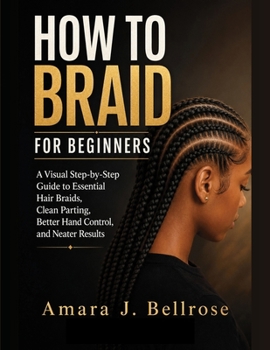
How to Braid For Beginners: A Visual Step-by-Step Guide to Essential Hair Braids, Clean Parting, Better Hand Control, and Neater Results

Stop losing strands, fighting uneven sections, or tightening harder just to make a braid hold. Learn the small hand movements that turn frustrating attempts into cleaner, more comfortable styles.
How to Braid for Beginners breaks braiding into controlled, repeatable actions you can see and practice. Instead of asking you to copy a finished hairstyle, it teaches preparation, strand naming, secure transfers, balanced tension, clean parting, and correction at the exact point a pattern begins to drift.
Move from cord and mannequin drills to complete three-strand braids, two-strand twists, rope braids, French and Dutch methods, fishtails, beginner cornrow foundations, self-braiding, texture adaptations, and everyday wearable styles. Photographs, Hand Check, Tension Check, Fix It boxes, practice passes, a troubleshooting reference, and a fourteen-day plan help you improve one skill at a time.
Inside this visual guide, you will: Build reliable finger control by learning how to name, hold, transfer, and separate working sections without squeezing or dropping strands.Create balanced three-strand braids, two-strand twists, rope braids, French braids, Dutch braids, and fishtails through clearly sequenced movements.Add loose hair in cleaner, more even amounts so your braid stays centered and your side panels look smoother.Adapt moisture, section size, grip, tools, and finishing choices for straight, wavy, curly, coily, fine, thick, short, layered, or slippery hair.Braid your own hair with less frustration by using practical mirror setups, touch-based checks, lower arm positions, and planned rest points.Diagnose loose roots, braid drift, uneven width, tangles, slippage, bumps, and inconsistent tension by correcting the cause rather than pulling harder.Practice with greater comfort and awareness by recognizing safe tension, protecting delicate edges, and stopping when the scalp or hands signal strain.If you are practicing on yourself, a friend, a family member, or a mannequin, this guide gives you a calm path from uncertain first crossings to repeatable styles. Start slowly, strengthen the weakest movement, and make your next braid cleaner, steadier, and more comfortable.
The wording accurately reflects the manuscript's illustrated, practice-based approach and its repeated emphasis on comfortable tension and correcting technique rather than using more force.
Customer Reviews
ThriftBooks ® and the ThriftBooks ® logo are registered trademarks of Thrift Books Global, LLC
