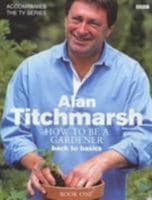
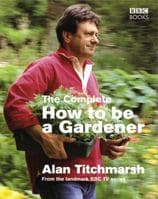
How to be a Gardener Book Two available in long last in paperback is the hugely successful follow up to the fastest-selling gardening title of all time. Having set out the basic principles of gardening in Book One, this second volume takes an in depth look at all areas of designing and planting your garden. Alan's love of gardening and years of experience really come to the fore as he demonstrates how to create a garden to be proud of. Covering both design and plants, the chapters include boundaries and climbers, patios and containers, borders and perennials and water and wildlife gardens. Released to coincide with How to be a Gardener Revisited, a reversioned series of HTBAG 1 & 2 featuring new footage with Alan Titchmarsh in January 2005. With its perfect balance of practical advice and inspirational ideas, How to be a Gardener Book Two gets to the very heart of gardening and, together with How to be a Gardener Book One, provides a complete reference manual for any garden owner. This description may be from another edition of this product.
A nice fit between text and illustrations, with a clean, well-ordered layout. This book would suffice as the only reference book for any home gardener. Lots of details, and yet not too "botanical" for the beginning gardener.
0
★★★★★
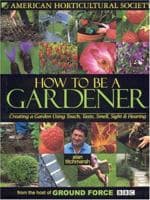
Gardening Entails The Use Of All Of Your Senses.
By Thriftbooks.com User, April 6, 2004
Peeking out of my widow on an early Montreal spring morning I was depressed and horrified to notice snow on the ground! Although, where I live, you never know when winter ends and spring arrives; it still came as a shock!In all probability, this would drive some to go for a swig of cognac in order to alleviate their winter blues, however, I decided to think positively and I began planning my garden.Every spring I have this urge to get it right. Unfortunately, I seem to fall into my annual trap in being clueless as to where to start, and even if I knew, how to continue maintaining a beautiful garden. Over the years, with all good intentions, I have either thumbed through or read from cover to cover one of the many gardening books. Most never seem to satisfy my needs. Moreover, they seem to presume that I know or should understand the basics of gardening. As a result, they devote very little space in delving into such topics as what is gardening, what is a plant, what plants need, what we need, where to start, and soil improvement.However, recently, along comes a superb comprehensive coffee table tome, How To Be A Gardener, authored by Alan Titchmarsh with glorious illustrative photographs by Jonathan Buckley that just about answers all of my naive queries.This beautifully rendered guide was published as an accompaniment to the BBC television series entitled, How To Be A Gardener. The guide not only explains how to garden, but why practicing certain techniques will aid us in achieving better results.The author points out that gardening should be a pastime where one's imagination should run wild and free. Essential is that you get a feel for gardening by using all of your senses-touch, taste, smell, sight and hearing, as well as just plain ordinary "horse sense" or common sense. It should also be noted, as we are reminded, that gardening never finishes, it is an on going process. If you can't accept this fact, then forget about it.Did you know you could learn a great deal about your soil by looking at the garden shortly after it has rained? All you have to do is rub a handful of soil between your fingers. In this way you can tell if it is sandy, clay, chalky, loamy, or peaty.Knowing the kind of soil will go along way in determining what to plant.The author points out another way to examine the soil by taking a handful of it and stirring it into a glass jar full of water. Allow the mess to settle, and then take a look at it.Here again the author explains the various possibilities.This is just one of many examples of the sage advice appearing throughout the sixteen chapters that examine the basics of gardening, the different seasons, maintenance, weeds, design, patio gardening, beds and borders, edible gardens, wildlife gardens, covered gardens, vertical gardening, and water features. One of the preponderant features of the book is its strong emphasis on clear and crafted explanations mixed with generous lush photographs and illustrative tab