Acclaimed author Margaret George tells the story of the legendary Greek woman whose face "launched a thousand ships" in this New York Times bestseller. The Trojan War, fought nearly twelve hundred years before the birth of Christ, and recounted in Homer's Iliad, continues to haunt us because of its origins: one woman's beauty, a visiting prince's passion, and a love that ended in tragedy. Laden with doom, yet surprising in its moments of innocence and beauty, Helen of Troy is an exquisite page-turner with a cast of irresistible, legendary characters--Odysseus, Hector, Achilles, Menelaus, Priam, Clytemnestra, Agamemnon, as well as Helen and Paris themselves. With a wealth of material that reproduces the Age of Bronze in all its glory, it brings to life a war that we have all learned about but never before experienced.
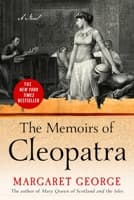
Margaret George is the author of The Autobiography of Henry VIII, The Memoirs of Cleopatra , and Elizabeth I, among other novels. Margaret first got the idea to write historical fiction when, after reading numerous books that viewed Henry VIII through the eyes of his enemies and victims, she found herself wondering if there might be another side to the story. She became determined to let Henry speak for himself, and it took fifteen years, about three hundred books of background reading, three visits to England to see every extant building associated with Henry, and five handwritten drafts for her to answer the question: What was Henry really like? Margaret was born in Nashville, Tennessee, and has traveled extensively. She and her husband live in Madison, Wisconsin.
While I have thoroughly enjoyed all the books I’ve read by Margaret George, I liked Helen of Troy the best so far. As with all her books you feel you are right there reliving history. Such vivid scenes and strong character development. I’ve decided to purchase all her books so I can read them time and again.
1
★★★★★
Gripping and Heart-Wrenching
By Thriftbooks.com User, June 13, 2007
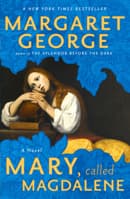
Make no mistake: Margaret George's Helen of Troy is indeed a doorstopper of a book, coming in at over 600 pages, and it could very easily have become bogged down in endless unpronounceable names and illogical storylines. Happily for the reader, the author pulls you in early on and builds the story layer by layer until you realize you've been entrapped in her words that will not let go until the final pages...and probably not until long after that. This is, of course, the legendary story of Helen of Troy, the "face that launched a thousand ships", and her lover Paris, with whom she leaves all she's known, including a husband, a child, and a kingdom. George has fleshed her characters out well; she's given Helen enough conscience that her guilt feelings seem real, yet we understand why she chose to leave with the god-like Paris. Upon entering Troy, Helen begins to realize the fall-out of her actions will reach much further than simply destroying her family. George gives us the tension leading up to the warfare between the Greeks and the Trojans and though we know the ultimate outcome, it is still heart-wrenching and exhausting. I really enjoyed this novel. Having been a long-time fan of George's, I found this novel to be a better written and more fascinating glimpse into an historical figure (real or not) than Mary Called Magdalene. Helen, with all her faults, comes through as a woman tortured by both love and loss. George is particularly good at bringing all the warring factions and heroes to life and she keeps them separated by their actions and personalities. I found this to be a credible, fascinating look into an era of history I knew relatively little about. Recommended.
1
★★★★★
AN EXCEPTIONAL LISTENING EXPERIENCE
By Thriftbooks.com User, September 19, 2006
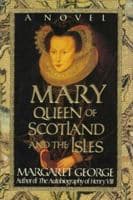
Throughout the ages there is one story that continues to intrigue us, losing none of its fascination despite the passage of time, and that is the myth of Helen of Troy. She was, as we know, an incomparable beauty, the woman whose "face launched a thousand ships" and she was also a woman in love whose elopement led to the Trojan War, which is found in Homer's Iliad. A daughter of Leda, Queen of Sparta, Helen is said to be fathered by none other than Zeus. Still in her teens she is wed to her brother-in-law, Menelaus, which was a politically advantageous arrangement. He probably would not have been her choice, although she did give him a daughter. Nonetheless, it was a loveless marriage. When Helen first saw the handsome Trojan prince, Paris, the course of history was changed. Before long the two became lovers and fled to Troy. (Depending upon the source, Helen either gladly left Menelaus and her daughter to go with Paris or she was abducted by him.) Whatever the case, Paris lost his life in the Trojan War and Helen married his brother, Deiphobus, who was later killed by Menelaus. At one time Menelaus had sworn to kill the wife who had forsaken him, but upon seeing Helen again he could not bring himself to do so. Esteemed author Margaret George (The Autobiography of Henry VIII, Mary Queen of Scotland) has given us a remarkable work by telling the story in Helen's voice. We are treated to a seldom found immediacy and view of life in Helen's day. Speaking of voices, classically trained actress Justine Eyre delivers a stunning performance as Helen. Her voice is young, distinct, with just a touch of an accent, very much the way we would expect Helen to sound. At times, she brings a wistfulness to Helen, especially in the Prologue as we hear "I flew back to Troy, no it was more like floating...." Truly an exceptional listening experience - enjoy! - Gail Cooke
1
★★★★★
Helen of Troy brought to life!
By Thriftbooks.com User, August 18, 2006
This book was an extremely interesting read. Written in the voice of Helen herself, it was moving, interesting, and wise, as well as historically acuratte and written with beautiful poise. My only major critique would be the pacing. Sometimes this book was dragged out too long, yet other times, it merely skimmed over things that could have been much better explained. However the writing was beautiful. With breathtaking metaphors, and author's craft, as well as realistic characters (especially Helen, and Paris), and a great climax, the good definatly outweighs the bad. I would recommend this to anyone who is a history or mythology buff, or an avid reader, searching for a great book to lose themselves in. I couldn't tear myself away, when Troy was burning, I felt as if I was literally there. This is an amazing read, and while it isn't perfect, it is definitly worthwhile.